
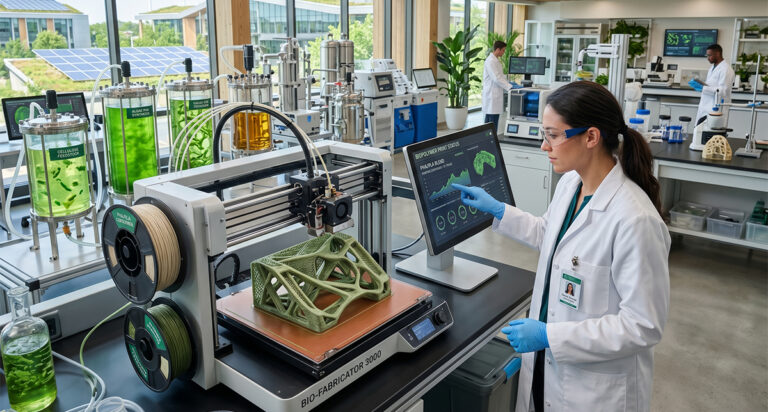
The global manufacturing industry is undergoing a major transformation as businesses seek smarter and more sustainable ways to produce goods. Growing environmental concerns, stricter regulations, and increasing consumer demand for eco-conscious products are encouraging companies to rethink traditional production practices. One of the most promising developments driving this change is the use of advanced biopolymer technologies. These innovative materials are opening new possibilities for industries looking to reduce environmental impact while maintaining quality, efficiency, and performance.
Sustainable manufacturing is no longer simply a trend; it has become a long-term strategy for organizations that want to remain competitive in an evolving marketplace. Industries around the world are actively searching for alternatives to conventional petroleum-based materials, and biopolymers are emerging as a practical and forward-looking solution.
Understanding Biopolymers and Their Growing Importance
Biopolymers are naturally derived or biologically produced materials that can serve as alternatives to traditional plastics and synthetic compounds. Unlike conventional materials that often rely heavily on fossil fuels, biopolymers are developed using renewable resources. Their composition allows manufacturers to create products that align with sustainability goals without compromising functionality.
As industries move toward greener operations, advanced biopolymer technologies are becoming increasingly valuable because they support the transition to more responsible production systems. Manufacturers are now able to develop products that offer durability, flexibility, and performance while reducing environmental burden.
The growing demand for sustainable materials is creating opportunities across sectors including packaging, agriculture, healthcare, consumer goods, and industrial manufacturing. Businesses are recognizing that environmentally responsible practices can also contribute to stronger brand reputation and long-term profitability.
The Evolution of Sustainable Manufacturing
Traditional manufacturing systems have often relied on resource-intensive processes that generate large amounts of waste and emissions. Over time, these practices have created environmental challenges including pollution, resource depletion, and increased carbon footprints.
Modern manufacturing is shifting toward systems that focus on efficiency and resource conservation. Sustainable production emphasizes minimizing waste, reducing energy consumption, and adopting materials that support circular economy principles.
Advanced biopolymer technologies fit naturally into this evolution because they help companies design products with environmental responsibility in mind. Manufacturers can integrate renewable materials into production processes while reducing dependence on non-renewable resources.
As technological advancements continue, the capabilities of biopolymers are expanding rapidly. New research and innovation are enabling these materials to meet increasingly complex industrial requirements.
How Advanced Biopolymer Technologies Are Driving Innovation
One of the most exciting aspects of modern biopolymer development is the speed of innovation. Scientists and manufacturers are continuously improving material properties to enhance strength, flexibility, heat resistance, and processing capabilities.
Advanced technologies now allow the creation of customized material solutions tailored to specific industrial applications. This flexibility enables manufacturers to meet performance requirements while maintaining sustainability objectives.
Research is also improving production efficiency, making biopolymers more accessible and commercially viable. Innovations in material engineering continue to increase the range of products that can benefit from sustainable alternatives.
Companies like Deltora Biopolymers are contributing to this evolving landscape by supporting environmentally conscious solutions that align with modern industrial needs. As businesses increasingly prioritize sustainable practices, reliable innovation becomes a key factor in long-term growth.
Industry Applications of Biopolymer Technologies
The future of sustainable manufacturing extends across numerous industries because biopolymer technologies can adapt to diverse requirements.
Packaging Industry
Packaging remains one of the largest sectors adopting sustainable materials. Businesses are seeking environmentally responsible alternatives that reduce waste and align with changing consumer expectations. Advanced biopolymer solutions provide packaging manufacturers with options that support both performance and sustainability.
Agriculture
Agricultural industries are exploring materials that contribute to efficient farming practices while reducing environmental impact. Biopolymer technologies can support eco-conscious product development and encourage more sustainable resource use.
Healthcare and Medical Industries
Medical applications require materials with precise characteristics and reliable performance standards. Research in biopolymer technologies continues to create opportunities for safer and more sustainable solutions across healthcare sectors.
Consumer Products
Consumers are becoming more aware of sustainability issues and increasingly prefer products from brands that demonstrate environmental responsibility. Manufacturers are responding by integrating sustainable materials into product development strategies.
Environmental Benefits of Biopolymer-Based Manufacturing
One of the primary advantages of biopolymer technologies is their ability to support environmentally responsible manufacturing systems. Sustainable materials can help organizations reduce reliance on finite resources while promoting more efficient use of raw materials.
Many advanced material solutions contribute to lower emissions and reduced industrial waste. Businesses can also improve sustainability reporting and align with evolving environmental regulations.
These advantages extend beyond environmental impact. Companies adopting sustainable practices often experience increased customer trust, stronger market positioning, and improved long-term resilience.
Looking Ahead at the Future of Manufacturing
The future of manufacturing will likely be shaped by technologies that combine innovation with environmental responsibility. Businesses that embrace sustainable material solutions today may gain significant advantages in the years ahead.
As research progresses, advanced biopolymer technologies will continue to improve performance capabilities and expand into new industrial applications. Greater investment in sustainable innovation will accelerate the transition toward cleaner and more efficient manufacturing ecosystems.
Organizations that adopt these technologies early can position themselves at the forefront of industry transformation. Deltora Biopolymers represents the growing movement toward responsible innovation and sustainable material advancement.
The future of sustainable manufacturing is built on smart choices, advanced technology, and long-term environmental commitment. As industries continue evolving, biopolymers are expected to play a critical role in shaping a more sustainable and efficient world.