
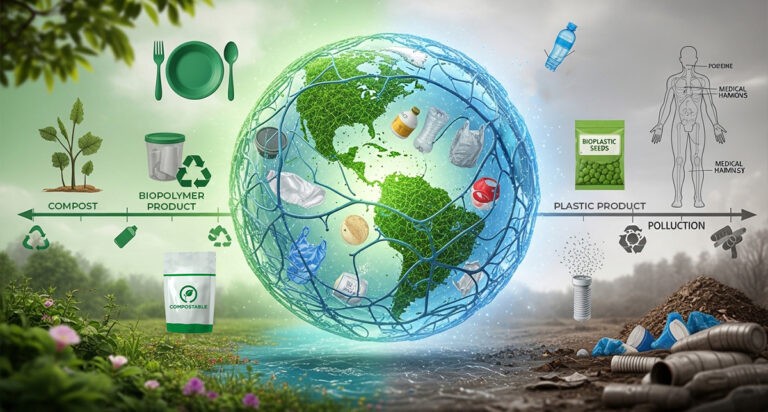
Plastic pollution has become one of the most pressing environmental challenges worldwide. Millions of tons of plastic waste enter landfills, oceans, and natural ecosystems every year, causing long-term damage to wildlife, soil health, and human well-being. Traditional plastics, made from fossil fuels, take hundreds of years to decompose, leading to severe environmental consequences. In response to this growing crisis, biopolymers have emerged as a promising solution that can significantly reduce global plastic pollution while supporting sustainable development.
Biopolymers are materials derived from renewable biological sources such as plant starch, corn, sugarcane, cellulose, and other natural resources. Unlike conventional plastics, many biopolymers are biodegradable or compostable, meaning they can break down naturally under the right environmental conditions. This ability to decompose reduces long-term waste accumulation and helps minimize pollution in landfills and oceans. As industries seek environmentally responsible alternatives, biopolymers are gaining popularity across multiple sectors, including packaging, agriculture, healthcare, and consumer goods.
One of the most impactful applications of biopolymers is in the packaging industry. Packaging accounts for a large portion of global plastic consumption, particularly single-use items such as bags, wrappers, and containers. By replacing traditional plastics with biopolymer-based materials, companies can significantly reduce their environmental footprint. Compostable packaging made from biopolymers not only performs well but also aligns with sustainability goals and regulatory requirements. Manufacturers such as Deltora Biopolymers Private Limited are actively contributing to this transition by developing eco-friendly material solutions designed to replace conventional plastic products.
Biopolymers also play a crucial role in supporting the circular economy. Instead of following a linear model of production, use, and disposal, biopolymer-based products can be integrated into systems that promote recycling, composting, and resource recovery. For example, compostable biopolymer packaging can be processed along with organic waste, converting it into nutrient-rich compost that benefits agriculture. This approach reduces landfill waste and supports sustainable waste management practices, creating a positive environmental cycle.
Another significant advantage of biopolymers is their potential to reduce carbon emissions. Since many biopolymers are produced from renewable resources, their overall carbon footprint is often lower compared to petroleum-based plastics. Plants used to produce biopolymers absorb carbon dioxide during their growth, partially offsetting emissions generated during manufacturing. This characteristic makes biopolymers an important tool in combating climate change while addressing plastic pollution simultaneously.
Agriculture is another sector benefiting from biopolymer innovation. Biodegradable mulch films, plant protection materials, and controlled-release agricultural products are helping farmers improve productivity while reducing environmental impact. Traditional plastic-based agricultural materials often remain in soil for years, causing contamination and disposal challenges. Biopolymer alternatives break down naturally, eliminating the need for removal and reducing soil pollution. Companies like Deltora Biopolymers Private Limited are working toward sustainable agricultural solutions that balance productivity with environmental responsibility.
The healthcare and medical industries are also exploring biopolymer applications. Biodegradable medical packaging, disposable healthcare products, and specialized materials are being developed to reduce plastic waste generated by hospitals and medical facilities. Since hygiene and safety are critical in healthcare environments, biopolymers offer a valuable solution by providing functionality while maintaining environmental sustainability.
Despite the many benefits, challenges remain in the widespread adoption of biopolymers. Production costs are often higher compared to conventional plastics, and infrastructure for composting and recycling biopolymer products is still developing in many regions. Additionally, consumer awareness about proper disposal methods is limited, which can reduce the effectiveness of biodegradable materials. However, ongoing research, technological advancements, and government support are gradually addressing these barriers, making biopolymers more accessible and affordable.
Innovation continues to drive the growth of the biopolymer industry. Scientists and manufacturers are developing new materials with improved strength, flexibility, and durability to meet the demands of various applications. As technology advances and production scales increase, the cost gap between biopolymers and traditional plastics is expected to narrow, encouraging broader adoption across industries.
In conclusion, biopolymers are playing a transformative role in reducing global plastic pollution by offering sustainable alternatives to conventional plastics. Their ability to biodegrade, support circular economy practices, and reduce carbon emissions makes them a powerful solution for environmental challenges. As industries, governments, and consumers increasingly prioritize sustainability, biopolymers will become an essential part of the global effort to protect ecosystems and promote responsible resource use. With continued innovation and collaboration, the transition toward biopolymer-based materials has the potential to create a cleaner, healthier, and more sustainable future for generations to come.