The Future of Bioplastics: Innovations and Trends in Sustainable Materials

The world is undergoing a significant transformation in how it approaches materials, waste, and sustainability. Traditional plastics, derived from fossil fuels, have dominated for over a century but now face intense scrutiny for their environmental impact. As global industries move toward greener solutions, bioplastics have emerged as one of the most promising innovations for a sustainable future. They combine functionality with eco-consciousness, helping industries reduce their carbon footprint while maintaining performance and efficiency.

Understanding Bioplastics

Bioplastics are materials derived from renewable biological sources, such as corn starch, sugarcane, cellulose, or vegetable oils, instead of petroleum. They can be biodegradable, compostable, or bio-based, depending on their composition and the technology used in their production. While all bioplastics are made from renewable sources, not all are biodegradable—some are designed to mimic the durability of traditional plastics for long-term use.

The growing awareness about plastic pollution and the urgent need to reduce dependency on fossil fuels have accelerated the adoption of bioplastics. Governments, corporations, and consumers are increasingly supporting materials that align with sustainability goals without compromising performance.

Current Market Trends

The bioplastics market is witnessing rapid growth globally. According to industry reports, the demand for bioplastics is expected to increase significantly in the next decade as more industries—ranging from packaging and automotive to healthcare and textiles—shift toward eco-friendly materials. The packaging sector remains the largest consumer of bioplastics, especially for food containers, films, and disposable cutlery.

However, the use of bioplastics is expanding beyond packaging. The automotive industry, for example, uses them to reduce vehicle weight and improve recyclability. In healthcare, biodegradable plastics are being used for surgical sutures, drug delivery systems, and medical implants. These diverse applications show that bioplastics are not just a trend—they represent a revolution in material science.

Innovations Driving the Future

Several groundbreaking innovations are shaping the future of bioplastics. Research and development efforts are focused on improving performance, scalability, and cost-effectiveness. Some of the most exciting advancements include:

  1. Next-Generation Feedstocks:
    Traditional bioplastics use food-based sources like corn or sugarcane, which can raise concerns about food security. The next generation of bioplastics, however, is being developed using non-food biomass such as algae, agricultural waste, or even carbon dioxide. These alternatives reduce competition with food supply chains and further minimize environmental impact.
  2. Advanced Biodegradability:
    Scientists are developing bioplastics that degrade faster and more completely, even in natural environments like soil and marine ecosystems. Innovations like PHA (Polyhydroxyalkanoates) and PLA (Polylactic Acid) are leading examples of materials that break down naturally without leaving toxic residues.
  3. Smart Material Engineering:
    Modern bioplastics are being engineered for specific mechanical properties, including flexibility, heat resistance, and strength. This allows them to replace petroleum-based plastics in applications previously thought impossible—such as electronics, automotive interiors, and 3D printing filaments.
  4. Recycling Integration:
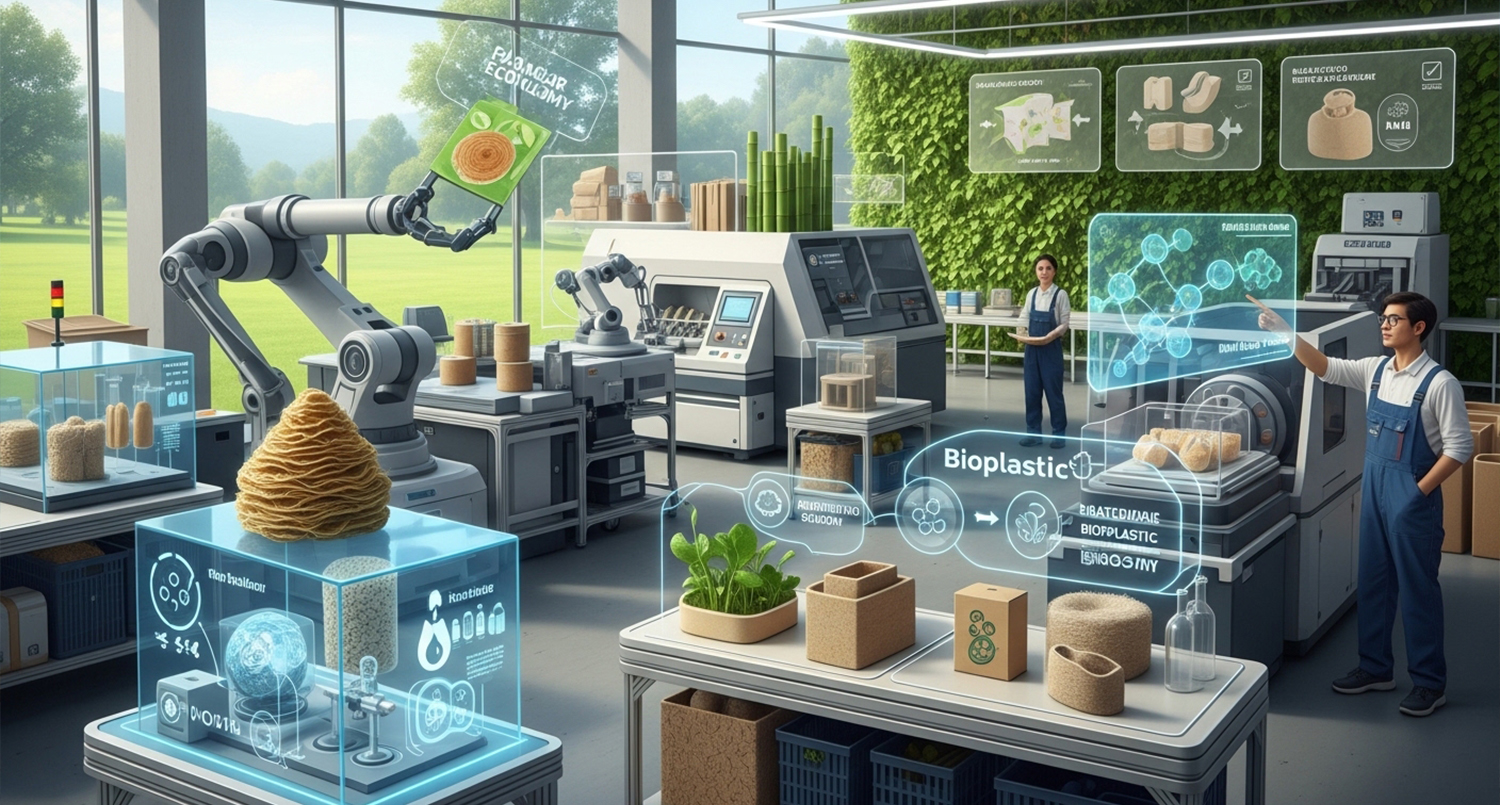
    A major focus of innovation is ensuring that bioplastics fit within existing recycling systems. New technologies are enabling bioplastics to be chemically recycled, allowing them to be converted back into raw materials for new products, thus supporting a circular economy.
  5. Hybrid Bioplastics:
    Researchers are experimenting with hybrid materials that combine biodegradable polymers with natural fibers like hemp, jute, or bamboo. These composites enhance strength and reduce costs while maintaining eco-friendly properties.

Sustainability and Circular Economy

Bioplastics are not just about reducing plastic waste; they’re an essential part of the circular economy—an approach that emphasizes reusing, recycling, and regenerating materials. By replacing fossil-based feedstocks with renewable sources, bioplastics reduce greenhouse gas emissions. Moreover, when designed for biodegradability or recyclability, they help minimize landfill waste and ocean pollution.

The shift toward a circular economy also encourages collaboration across industries. Manufacturers, recyclers, and policymakers must work together to create infrastructure that supports bioplastic collection, composting, and reprocessing. Companies like Delta Biopolymers are leading the way in driving awareness and innovation in sustainable material science, promoting eco-friendly solutions that align with both environmental and business goals.

Challenges in Bioplastics Adoption

While bioplastics offer immense potential, there are challenges to overcome. The cost of production is still higher compared to conventional plastics, mainly due to limited large-scale infrastructure and supply chain complexities. Additionally, public understanding of bioplastics remains limited—many consumers are unaware of the difference between “biodegradable” and “compostable” plastics.

To achieve widespread adoption, stakeholders must focus on education, innovation, and investment. Governments can play a vital role by implementing supportive policies, tax incentives, and research grants. Businesses, in turn, can invest in sustainable product design and collaborate with suppliers that prioritize environmentally responsible materials.

The Road Ahead

The future of bioplastics is bright and full of promise. As technology advances and economies of scale are achieved, bioplastics will become more affordable, accessible, and efficient. The combination of innovation, environmental awareness, and policy support will drive the industry toward mainstream acceptance.

Companies such as Delta Biopolymers continue to play a crucial role in this transformation—developing bio-based materials that help industries shift away from fossil fuels while maintaining product performance and reliability. Their commitment to innovation and sustainability reflects the broader movement toward a greener, cleaner, and more responsible future.

Conclusion

Bioplastics represent a powerful step forward in the journey toward sustainability. They embody the harmony between technological advancement and environmental responsibility. As research deepens and applications expand, these innovative materials will redefine industries and reshape our planet’s relationship with plastic. The next decade will be pivotal in realizing a world where bioplastics become not just an alternative—but the standard for sustainable material development.

Why Bioplastics Are the Future Exploring Eco-Friendly Alternatives to Traditional Plastics

In a world grappling with environmental degradation, plastic pollution stands out as one of the most urgent challenges. Traditional plastics, derived from fossil fuels, take hundreds of years to decompose and leave lasting impacts on ecosystems. As awareness grows and sustainable solutions are prioritized, bioplastics are emerging as the future of material innovation.

Bioplastics offer an eco-friendly alternative to conventional plastics, presenting hope for a cleaner, greener planet. This article explores what bioplastics are, their advantages, their environmental significance, and why they are seen as a cornerstone of future sustainability.

What Are Bioplastics?

Bioplastics are materials that are either bio-based (derived from renewable sources like corn starch, sugarcane, or cellulose) or biodegradable (capable of decomposing naturally under the right conditions). Unlike traditional plastics made from petroleum, bioplastics can often break down more quickly and have a reduced carbon footprint.

There are two main types of bioplastics:

  • Bio-based plastics: Made from renewable biological resources. Some may or may not be biodegradable.
  • Biodegradable plastics: Designed to break down via natural processes, regardless of the raw materials.

Common types of bioplastics include PLA (Polylactic Acid), PHA (Polyhydroxyalkanoates), and starch blends, each serving different industrial and commercial applications.


Benefits of Choosing Bioplastics

Bioplastics bring numerous environmental, economic, and societal advantages:

1. Reduced Carbon Emissions

Producing bioplastics typically results in significantly fewer greenhouse gas emissions compared to fossil-fuel-based plastics. As they are made from renewable resources, they help close the carbon cycle naturally.

2. Decreased Dependency on Fossil Fuels

The production of traditional plastics heavily relies on finite fossil resources. Bioplastics reduce this dependence, promoting the use of sustainably sourced materials.

3. Biodegradability and Compostability

Certain bioplastics can decompose under industrial composting conditions within months, unlike conventional plastics that persist for centuries. This makes them ideal for single-use products, food packaging, and agricultural applications.

4. Innovation and Versatility

Bioplastics can be engineered for a wide range of applications — from food containers and medical devices to electronics and automotive parts. Their versatility rivals that of traditional plastics, opening doors for eco-friendly innovation across industries.

5. Positive Public Perception

Companies adopting bioplastics demonstrate environmental responsibility, which resonates with increasingly eco-conscious consumers and investors. This shift can enhance brand image and marketability.


Why Are Bioplastics Important for the Environment?

The environmental crisis posed by traditional plastics is catastrophic — choking marine life, filling landfills, and contributing to toxic waste. Bioplastics represent an essential pivot toward mitigating these effects:

  • Reducing Plastic Pollution: Biodegradable options minimize the volume of persistent waste accumulating in oceans and landscapes.
  • Conserving Resources: By using agricultural waste or renewable crops, bioplastics help conserve finite resources for future generations.
  • Supporting Circular Economy: Bioplastics fit seamlessly into a circular economy model, where materials are reused, recycled, and returned to nature without harm.

However, it’s important to note that not all bioplastics are inherently eco-friendly; conditions for biodegradation must be correctly managed, and production practices should remain sustainable. That said, the overall shift toward bioplastics is a necessary and highly positive step.

The Role of the Industry: Future Outlook

Today, countless companies worldwide are heavily investing in bioplastic technologies, pushing research boundaries to make materials stronger, cheaper, and even more sustainable. Many brands have also committed to replacing all conventional plastic packaging with biodegradable alternatives within the next decade.

Among these innovators, the Top Bioplastic Company in India is playing a significant role in setting benchmarks for sustainable plastic manufacturing. By focusing on high-quality bio-based and compostable products, they contribute directly to reducing environmental impacts on a large scale.

Furthermore, growing government regulations, public demand, and international agreements are accelerating the adoption of eco-friendly materials across industries like packaging, agriculture, healthcare, and electronics.

In this transformation journey, another Top Bioplastic Company in India is investing in R&D, ensuring that products meet both functionality standards and environmental goals. Their dedication to sustainability acts as an inspiration for businesses globally to rethink their material choices.

Conclusion

Bioplastics are not just a trend; they are the foundation for a sustainable future. By replacing harmful traditional plastics with renewable, biodegradable alternatives, we can tackle some of the most pressing environmental challenges of our time. Governments, businesses, and consumers must collaborate to make bioplastics the norm rather than the exception.

As the world moves towards responsible consumption and production, choosing bioplastics becomes not only a smart environmental decision but also a moral imperative. Supporting innovative companies working in this field can drive real, lasting change for generations to come.


FAQs

Q1. What are bioplastics made from?
Bioplastics are made from renewable biological sources like corn starch, sugarcane, vegetable fats, and even agricultural waste.

Q2. Are all bioplastics biodegradable?
No, not all bioplastics are biodegradable. Some are simply bio-based but behave like conventional plastics unless processed in special conditions.

Q3. Why are bioplastics considered eco-friendly?
Bioplastics reduce carbon emissions, are made from renewable sources, and can decompose naturally, making them more environmentally friendly than petroleum-based plastics.

Q4. Can bioplastics replace all traditional plastics?
While bioplastics are suitable for many applications, some specialized plastic uses still require traditional materials. However, ongoing research aims to close these gaps.

Q5. What is the future of bioplastics?
The future is bright, with increasing demand, technological advancements, and government policies promoting the widespread adoption of bioplastics across industries.