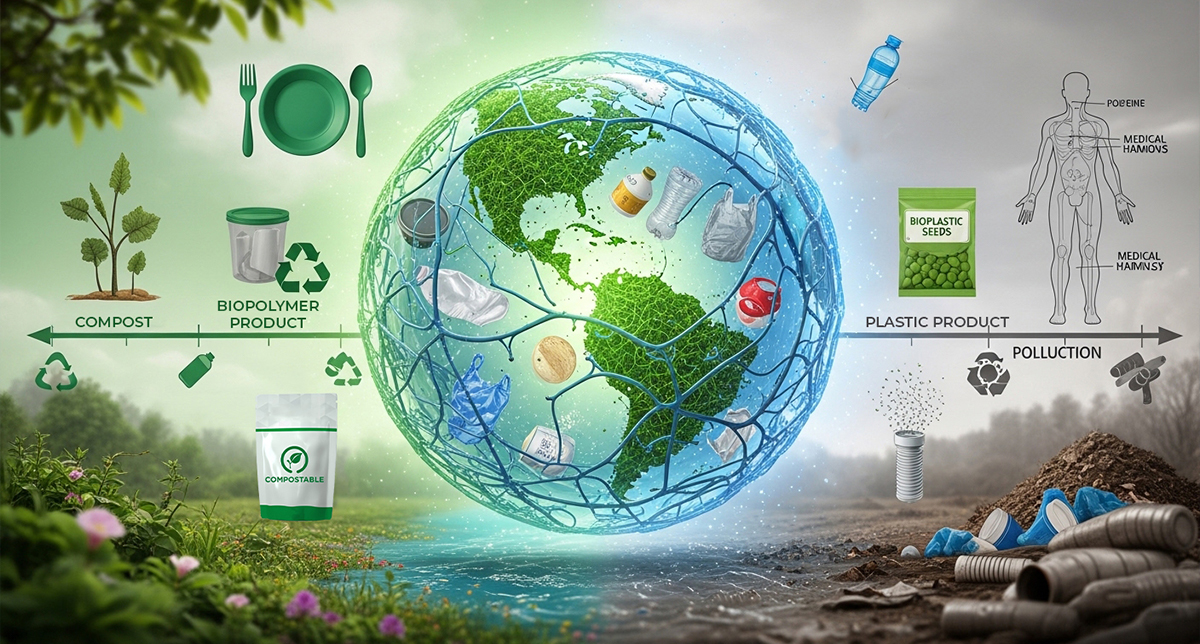
Reducing Plastic Waste How Biopolymers Make a Difference

Plastic pollution has become one of the most pressing environmental challenges of the 21st century. With millions of tons of plastic waste ending up in landfills and oceans every year, there is an urgent need for sustainable alternatives. Biopolymers, a type of biodegradable and renewable material, are emerging as a powerful solution to reduce plastic waste. Companies like Deltora Biopolymers Private Limited are at the forefront of developing innovative biopolymer products that help businesses and consumers minimize their environmental footprint.

What Are Biopolymers?

Biopolymers are materials derived from natural sources such as corn starch, sugarcane, cellulose, and other plant-based resources. Unlike traditional plastics made from petroleum, biopolymers are renewable, biodegradable, and often compostable. They can be used to manufacture a variety of products, including packaging, bags, disposable cutlery, and even textiles.

By breaking down naturally under composting or controlled environmental conditions, biopolymers prevent the accumulation of non-degradable plastic waste in landfills and oceans. This characteristic makes them an ideal choice for companies looking to adopt sustainable practices.

The Environmental Impact of Traditional Plastics

Conventional plastics can take hundreds of years to decompose. During this time, they release harmful chemicals and break into microplastics that contaminate soil and water. This pollution not only affects ecosystems but also poses health risks to humans through the food chain.

The food and retail sectors, in particular, are major contributors to plastic waste. Single-use plastic packaging, shopping bags, and disposable utensils dominate these industries, making it crucial to adopt alternatives that can reduce environmental damage.

How Biopolymers Help Reduce Plastic Waste

  1. Biodegradability
    Biopolymers decompose naturally over time, reducing the burden on landfills and oceans. This helps minimize the long-term environmental impact of plastic waste.
  2. Renewable Resources
    Unlike petroleum-based plastics, biopolymers are derived from plants and agricultural waste. This reduces dependency on fossil fuels and promotes sustainable resource management.
  3. Versatile Applications
    Biopolymers can replace conventional plastics in multiple applications, including packaging, disposable cutlery, containers, and films. Their adaptability ensures a smooth transition for businesses aiming to reduce plastic use.
  4. Compliance with Regulations
    Governments worldwide are implementing strict bans and restrictions on single-use plastics. Switching to biopolymer-based products helps companies comply with these regulations and avoid penalties.
  5. Enhanced Brand Image
    Consumers increasingly prefer brands that prioritize sustainability. By using biopolymer products, businesses can strengthen their reputation and build loyalty among eco-conscious customers.

Applications of Biopolymers Across Industries

Biopolymers are not limited to a single sector. They are widely used in food packaging, healthcare, agriculture, and retail industries. Restaurants and food delivery services use biopolymer-based containers, cutlery, and bags. Retailers adopt biopolymer shopping bags and wrapping films, while healthcare facilities utilize biodegradable medical packaging.

Deltora Biopolymers Private Limited provides a range of biopolymer solutions that are tailored for diverse industry requirements. Their products are certified for quality, food safety, and compostability, ensuring businesses can integrate eco-friendly alternatives without compromising performance.

Challenges and Considerations

While biopolymers are a promising alternative, certain challenges need to be addressed. Proper disposal and composting infrastructure are essential to achieve effective biodegradation. Without these facilities, some biopolymers may not decompose as intended.

Additionally, businesses must choose certified biopolymer products. Certifications such as ASTM D6400 and EN 13432 ensure the material meets international standards for biodegradability and compostability. Educating consumers and employees about proper disposal is also critical to maximize environmental benefits.

The Future of Biopolymers

The shift towards biopolymers is more than a trend—it is a global movement towards sustainable living. Continuous innovation in biopolymer technology is making these materials stronger, more versatile, and cost-effective. By adopting biopolymers, businesses can significantly reduce plastic waste, comply with regulations, and meet the growing demand for eco-friendly products.

Deltora Biopolymers Private Limited continues to innovate, offering solutions that help industries reduce their reliance on traditional plastics while maintaining high performance and quality standards. As awareness of plastic pollution grows, biopolymers will play an increasingly important role in shaping a sustainable future.


FAQs About Biopolymers and Plastic Waste Reduction

1. What are biopolymers?
Biopolymers are materials made from renewable natural sources such as cornstarch, sugarcane, and cellulose. They are biodegradable and, in many cases, compostable, making them an eco-friendly alternative to traditional plastics.

2. How do biopolymers reduce plastic waste?
Biopolymers decompose naturally over time, reducing landfill and ocean accumulation. They replace conventional plastics in packaging, cutlery, bags, and other single-use products.

3. Are biopolymers safe for food packaging?
Yes, certified biopolymer products are food-safe, non-toxic, and suitable for both hot and cold food items. Companies like Deltora Biopolymers Private Limited ensure their products meet industry standards.

4. Can biopolymers be recycled?
Some biopolymers can be composted, but they may not always be suitable for traditional recycling streams. Proper industrial or home composting is recommended for effective biodegradation.

5. What industries can benefit from biopolymers?
Biopolymers are versatile and widely used in food packaging, healthcare, agriculture, retail, and even textiles. Any industry seeking to reduce plastic waste can benefit from their adoption.

The Future of Packaging Why Biopolymers Are the Sustainable Choice

The packaging industry is undergoing a major transformation. With growing concerns about plastic pollution and environmental sustainability, businesses are seeking alternatives to conventional plastics. Biopolymers, derived from renewable natural sources, are emerging as a leading solution for sustainable packaging. Companies like Deltora Biopolymers Private Limited are pioneering the development of high-quality biopolymer products that are eco-friendly, durable, and versatile, offering businesses a sustainable path forward.

Understanding Biopolymers

Biopolymers are materials created from biological sources such as cornstarch, sugarcane bagasse, cellulose, and other plant-based compounds. Unlike traditional petroleum-based plastics, biopolymers are renewable and biodegradable. Some biopolymers are also compostable, meaning they can naturally break down into non-toxic substances under industrial composting conditions.

This unique property allows biopolymers to provide the functionality of conventional plastics while minimizing environmental harm. They can be used to create packaging films, bags, containers, cups, cutlery, and other single-use products.

Why the Packaging Industry Needs Sustainable Solutions

Plastic packaging has long been a staple of the food, retail, and e-commerce sectors. However, it has a severe environmental cost. Single-use plastics take hundreds of years to degrade, contaminating soil and water with microplastics that harm wildlife and human health.

Consumers are increasingly demanding sustainable packaging solutions, and governments worldwide are implementing strict regulations to limit the use of single-use plastics. This shift is pushing companies to explore alternatives that are both environmentally responsible and economically feasible.

Benefits of Using Biopolymers in Packaging

  1. Reduced Environmental Impact
    Biopolymers break down naturally, reducing the accumulation of non-degradable waste in landfills and oceans. This contributes to cleaner ecosystems and lower pollution levels.
  2. Renewable Resources
    Unlike petroleum-based plastics, biopolymers are sourced from plants, reducing reliance on fossil fuels and supporting sustainable agriculture.
  3. Versatility in Applications
    Biopolymers are suitable for a wide range of packaging applications, including food containers, shopping bags, wrapping films, and disposable cutlery. Their flexibility allows businesses to replace plastics without sacrificing functionality.
  4. Consumer Trust and Brand Value
    Eco-conscious consumers are more likely to support brands that adopt sustainable practices. Using biopolymer packaging demonstrates environmental responsibility, enhancing brand reputation and customer loyalty.
  5. Regulatory Compliance
    Many countries have started enforcing bans and restrictions on single-use plastics. Biopolymers allow businesses to comply with regulations while continuing to meet packaging needs effectively.

Innovations Driving the Biopolymer Packaging Industry

The biopolymer packaging industry has witnessed significant innovation in recent years. Companies are developing materials that are stronger, more heat-resistant, and adaptable for different food and retail applications.

Deltora Biopolymers Private Limited offers an extensive range of certified biopolymer products, including compostable films, bags, containers, and cutlery. These products meet international standards for food safety and compostability, ensuring that businesses can adopt sustainable packaging solutions without compromising on quality.

Challenges in Transitioning to Biopolymer Packaging

While biopolymers offer numerous benefits, their adoption comes with certain challenges. Proper disposal and composting infrastructure are necessary to achieve effective biodegradation. Without industrial composting facilities, some biopolymer products may not decompose efficiently.

Businesses also need to select certified products with recognized standards such as ASTM D6400 or EN 13432 to ensure quality and compliance. Educating consumers and staff about proper disposal practices is essential to maximize the environmental impact of biopolymer packaging.

The Future Outlook

The future of packaging is undoubtedly moving toward sustainability, with biopolymers playing a central role. As technology improves, biopolymers are becoming more affordable, versatile, and widely available. Early adoption of biopolymer packaging not only helps reduce environmental impact but also positions businesses as leaders in sustainable innovation.

Deltora Biopolymers Private Limited continues to support companies in this transition by providing high-quality, eco-friendly packaging solutions that align with global sustainability goals. With growing awareness and advancements in biopolymer technology, the packaging industry is poised for a greener, more responsible future.


FAQs About Biopolymers in Sustainable Packaging

1. What are biopolymers?
Biopolymers are materials made from renewable natural sources like cornstarch, sugarcane, and cellulose. They are biodegradable and, in some cases, compostable, making them a sustainable alternative to conventional plastics.

2. Why are biopolymers important for the packaging industry?
Biopolymers reduce plastic waste, support sustainability, comply with regulations, and improve brand reputation by meeting the demand for eco-friendly packaging solutions.

3. Are biopolymers safe for food packaging?
Yes, certified biopolymer products are food-safe, non-toxic, and suitable for both hot and cold items. Companies like Deltora Biopolymers Private Limited ensure their products meet all safety and quality standards.

4. Can biopolymers replace all types of plastic packaging?
Biopolymers are versatile and can replace most single-use plastic packaging, including bags, containers, films, and cutlery. However, specialized applications may require specific biopolymer formulations.

5. How should businesses dispose of biopolymer packaging?
Biopolymer products should ideally be disposed of in industrial composting facilities. Educating staff and consumers on proper disposal ensures effective biodegradation and maximizes environmental benefits.

Why Plant-Based Polymers Are Becoming the Top Choice for Conscious Brands in India

India is witnessing a powerful shift in how brands think about materials, packaging, and sustainability. As environmental awareness increases and consumers demand cleaner, more responsible products, companies across the country are re-examining their reliance on traditional plastics. Among the many emerging alternatives, plant-based polymers have quickly risen to prominence—becoming the preferred choice for conscious, forward-thinking brands.

Plant-based polymers, also known as bio-based polymers, are derived from renewable plant sources such as starch, sugarcane, bamboo, corn, cellulose, and other agricultural resources. They combine the advantages of natural origin with the engineering performance required in commercial use. As market trends evolve, these innovative polymers are reshaping how businesses operate and how products reach consumers.

The Rise of Conscious Consumerism in India

Over the last decade, consumer behaviour in India has undergone a remarkable transformation. Today’s buyers are not simply looking for affordable or convenient products—they are actively seeking ethical brands that align with their environmental values. Social media awareness, growing media coverage on pollution, and government policy changes have all contributed to a new generation of conscious consumers.

These consumers prefer products that are responsibly made, sustainably packaged, and planet-friendly. This growing demand has encouraged brands to explore eco-driven material choices—and plant-based polymers stand out as one of the most promising solutions.

What Makes Plant-Based Polymers So Popular?

The reasons behind the rise of plant-based polymers are numerous, and their benefits extend well beyond sustainability. Here are the key factors driving their adoption:

1. They Reduce Dependence on Fossil Fuels

Conventional plastic is petroleum-based, making it unsustainable in the long term. Plant-based polymers, in contrast, are derived from renewable plant resources. This shift not only reduces reliance on limited fossil fuels but also supports farming ecosystems, rural industries, and agricultural economies.

2. They Support Cleaner Production Processes

The production of plant-based polymers generally emits fewer greenhouse gases compared to traditional plastic manufacturing. Many of these polymers are created using low-energy processes or from agricultural waste that would otherwise be discarded. This makes them ideal for brands committed to reducing their carbon footprint.

3. They Offer Versatility Across Industries

Plant-based polymers are surprisingly versatile—they can be engineered to create flexible films, sturdy containers, packaging sheets, industrial components, and even textile applications. Their adaptability makes them suitable for food packaging, beauty products, retail goods, e-commerce packaging, and more.

4. They Strengthen Brand Image

Sustainability has become a strong selling point. When a company uses plant-based materials, it signals responsibility, transparency, and environmental commitment. This enhances brand loyalty and differentiates the company in a competitive market. For many brands, shifting to plant-based polymers becomes a powerful marketing advantage.

5. They Align With Government Policies

India is tightening regulations on plastics, including restrictions on single-use items. Plant-based polymers help brands stay compliant with evolving laws while future-proofing their product lines. As regulations expand further, these eco-friendly materials will play a critical role in long-term strategy.

Industries Leading the Transition in India

A range of sectors are turning to plant-based polymers as practical and scalable alternatives. Some of the fastest adopters include:

1. Food & Beverage Packaging

Restaurants, cloud kitchens, FMCG companies, and organic product brands are moving toward bio-based containers, cups, films, and wrappers. These solutions maintain hygiene and quality while reflecting the brand’s environmental values.

2. E-Commerce & Retail

With the booming e-commerce industry, packaging waste has become a major concern. Many online brands are switching to plant-derived packing materials to reduce plastic usage and improve sustainability ratings.

3. Beauty & Personal Care

Cosmetics and skincare brands are using plant-based polymer containers and packaging to appeal to eco-conscious buyers. This trend aligns well with the industry’s clean, natural, and toxin-free narratives.

4. Consumer Goods

From cutlery to home essentials, everyday products made from plant-based polymers are increasingly replacing conventional plastics in conscious households.

Innovation Driving This Material Revolution

Advanced material research has made plant-based polymers stronger, more flexible, and more customizable than ever before. Innovations include:

  • Starch and cellulose-based films with high transparency
  • Fiber-reinforced composites for industrial use
  • Bio-based resins engineered for durability
  • Water-resistant natural coatings for safer packaging
  • Plant-derived blends suitable for mass production

These developments demonstrate that plant-based polymers are not simply eco-friendly—they are technologically advanced and commercially viable.

Leading companies, such as Deltora Biopolymers Private Limited, are playing a major role in accelerating this shift by developing high-performance plant-based solutions suitable for Indian market needs. Their work shows how sustainability and innovation can co-exist without compromising product quality.

Why Conscious Brands Are Making the Switch Now

Conscious brands understand that sustainability is more than a trend—it is a necessity. The shift to plant-based polymers allows them to:

  • Build trust with environmentally aware customers
  • Reduce their ecological footprint
  • Strengthen long-term brand reputation
  • Future-proof their business against regulatory changes
  • Show leadership in sustainable innovation

Companies like Deltora Biopolymers Private Limited demonstrate that adopting cleaner materials is not just good for the environment, but also a strong business decision.

Conclusion: A Future Built on Responsible Materials

Plant-based polymers are transforming how India thinks about packaging, manufacturing, and sustainability. As businesses look for alternatives to traditional plastics, these natural, innovative materials are emerging as the top choice for brands that care about the planet and their customers.

The shift toward plant-based polymers reflects a deeper movement—one where brands take responsibility for the footprints they leave behind. With increasing innovations and rising consumer demand, India is poised to become a leader in the next material revolution.

The Future of Eco-Polymers How Sustainable Solutions Are Reshaping Today’s Industries

In recent years, the global push toward sustainability has accelerated faster than ever before. Businesses, manufacturers, and brands across sectors are seeking alternatives that not only reduce environmental impact but also support long-term operational efficiency. This shift has placed eco-polymers at the centre of innovation. These advanced, plant-based, and environmentally responsible polymer solutions are quietly transforming how industries operate—bringing a future that prioritizes performance without harming the planet.

Understanding the Rise of Eco-Polymers

Eco-polymers are engineered from renewable sources such as starch, agricultural waste, and plant-derived compounds. Unlike traditional plastic, which is dependent on fossil fuels, eco-polymers offer a sustainable foundation for packaging, product design, and industrial applications. Their growing relevance is not simply due to the demand for eco-friendly solutions; it is also driven by advances in chemistry and engineering that allow these polymers to compete with, and often outperform, conventional plastic.

Companies like Deltora Biopolymers Private Limited have become major contributors to this shift by developing eco-polymer technologies tailored for real-world, high-performance use cases. As industries recognize the importance of reducing carbon footprints, eco-polymers are emerging as a key driver of change.

Why Eco-Polymers Are Becoming Industry Favorites

Across sectors—from e-commerce packaging to agriculture and consumer goods—organizations are adopting eco-polymers to meet sustainability goals and regulatory standards. Several factors make these solutions highly attractive:

1. Reduced Environmental Impact

Eco-polymers minimize dependence on petroleum-based raw materials. Their production process often requires less energy and generates fewer greenhouse gas emissions. This makes them ideal for organizations committed to circular economy practices and climate-conscious operations.

2. Growing Regulatory Pressure

Governments worldwide are tightening their policies on plastic waste. Many countries are enforcing bans or restrictions on single-use plastics and demanding the adoption of eco-friendly alternatives. Eco-polymers offer a compliant, future-proof solution that aligns with regulatory expectations.

3. Better Brand Reputation

Consumers today prefer brands that prioritize sustainability. Using eco-polymers in packaging or products strengthens brand value and enhances customer trust. For businesses looking to modernize their identity, adopting sustainable polymer solutions is a strategic decision.

4. Strong Functional Performance

One of the biggest myths is that eco-friendly solutions lack strength or durability. However, modern eco-polymers are engineered to match or exceed the functional requirements of traditional plastics. They can be designed with various characteristics such as flexibility, tensile strength, moisture resistance, and temperature stability—making them suitable for diverse applications.

Industries Leading the Eco-Polymer Revolution

Many industries are rapidly integrating eco-polymers into their manufacturing and product strategies. Some of the most notable sectors include:

1. Packaging and E-Commerce

As the demand for sustainable packaging grows, eco-polymers are becoming the preferred choice for bags, wrappers, food containers, and cushioning materials. E-commerce companies, in particular, are adopting eco-polymers to align with global sustainability standards and reduce plastic waste.

2. Agriculture

Agriculture is experiencing a transformation with the use of eco-polymer-based films, coverings, and mulching sheets. These solutions support better crop growth while offering eco-friendly disposal options—replacing conventional plastic that harms soil health.

3. Consumer Goods

From disposable cutlery to household products, eco-polymers are becoming a standard choice for businesses that want to appeal to environmentally aware customers. Their versatility makes them suitable for everything from rigid items to flexible products.

4. Medical and Healthcare

Eco-polymers are also finding applications in medical packaging, diagnostic tools, and temporary-use products where sustainability and safety must go hand in hand.

Innovation and the Future of Eco-Polymers

The evolution of eco-polymers is just beginning. Continued research and development are leading to stronger, more adaptable, and more cost-efficient solutions. As technology advances, we can expect eco-polymers to play an even bigger role in product innovation, design engineering, and manufacturing processes.

Industry leaders like Deltora Biopolymers Private Limited are investing in next-generation polymer science to bridge the gap between environmental responsibility and industrial performance. Their work shows how sustainable materials can reduce waste, promote cleaner ecosystems, and support global climate goals.

Final Thoughts: A Sustainable Path Forward

Eco-polymers represent more than an emerging trend—they reflect a global movement toward conscious production and responsible consumption. As industries evolve, the need for sustainable alternatives becomes essential rather than optional. The future belongs to companies that embrace innovation, reduce dependency on harmful materials, and adopt environmentally responsible solutions.

With continuous advancements and growing market demand, eco-polymers are set to become the backbone of tomorrow’s industries. Their impact goes far beyond environmental benefits—they are reshaping industrial strategy, product design, and consumer expectations. The shift to eco-polymers marks a crucial step toward a cleaner, healthier, and more sustainable future for all.

Challenges and Solutions in Scaling Up Biopolymer Production

In an era where environmental sustainability is more than just a trend, biopolymers are gaining significant attention as eco-friendly alternatives to conventional plastics. Derived from renewable sources like starch, cellulose, and vegetable oils, biopolymers hold the promise of reducing carbon footprints and minimizing plastic pollution. However, transitioning biopolymer production from lab-scale innovations to full-scale industrial manufacturing presents several challenges. Overcoming these hurdles is crucial to making biopolymers a viable and competitive choice for industries worldwide. Companies like Deltora Biopolymers Private Limited are at the forefront of addressing these challenges through innovation, research, and sustainable production strategies.

1. The Complexity of Raw Material Sourcing

The production of biopolymers relies heavily on renewable feedstocks such as corn, sugarcane, or cassava. However, sourcing these raw materials consistently and sustainably is a major challenge. Agricultural fluctuations due to climate change, soil degradation, and water scarcity can significantly impact the supply chain. Moreover, using food crops for polymer production often raises ethical concerns regarding food security and land usage.

Solution:
To overcome this challenge, biopolymer manufacturers are increasingly exploring second-generation biomass sources—non-food-based feedstocks such as agricultural residues, algae, and organic waste. Developing strong partnerships with local suppliers and implementing sustainable agricultural practices can also ensure a steady, eco-friendly supply chain. Companies adopting this model can reduce their dependence on food crops and lower production costs in the long term.

2. High Production Costs and Limited Economies of Scale

One of the most significant obstacles in scaling up biopolymer production is cost. The processes involved in extracting, fermenting, and refining natural polymers are still more expensive than petroleum-based plastic production. This makes biopolymers less competitive in mass markets where pricing plays a critical role.

Solution:
Reducing production costs requires technological innovation and optimization. Continuous research into more efficient fermentation techniques, enzyme catalysis, and process automation can help minimize operational expenses. Additionally, as production volumes increase and demand rises, economies of scale can naturally drive down costs. Collaborative efforts between research institutions, government agencies, and companies like Deltora Biopolymers Private Limited are vital in achieving cost-efficient, large-scale biopolymer production.

3. Inconsistent Quality and Performance

Unlike conventional plastics that have been perfected over decades, biopolymers often face issues with consistency and performance. Factors such as moisture sensitivity, limited heat resistance, and varying mechanical strength can affect their usability in industrial applications. Achieving uniform quality in large-scale production is another hurdle for manufacturers.

Solution:
Advanced material engineering and blending techniques offer a promising path forward. By combining biopolymers with natural fibers, fillers, or other bio-based additives, manufacturers can enhance the strength, durability, and flexibility of the final product. Continuous quality control using AI-driven monitoring systems ensures that the end products meet international standards and maintain performance consistency.

4. Infrastructure and Technology Limitations

Biopolymer manufacturing often requires specialized equipment, fermentation reactors, and controlled environmental conditions. Setting up large-scale facilities involves substantial capital investment and advanced technological expertise. Moreover, most existing plastic production infrastructure is not compatible with biopolymers, posing an additional barrier to adoption.

Solution:
To address this issue, companies are focusing on modular and scalable plant designs that can be expanded as demand grows. Governments and private investors can play a critical role by funding pilot projects and supporting infrastructure development through green technology incentives. Investing in hybrid manufacturing systems that can handle both traditional plastics and biopolymers also makes the transition more feasible and cost-effective.

5. Market Acceptance and Consumer Awareness

Even though biopolymers are more sustainable, their success largely depends on consumer acceptance and market demand. Many consumers are still unaware of the environmental benefits of biopolymers, while businesses hesitate to switch due to misconceptions about performance or pricing.

Solution:
Building awareness through education, certifications, and transparent sustainability reporting is crucial. Marketing efforts that emphasize the long-term environmental benefits and performance reliability of biopolymer products can boost consumer trust. Collaboration between manufacturers, retailers, and environmental organizations can further drive awareness and encourage adoption across various industries, from packaging and textiles to automotive components.

6. Regulatory and Standardization Challenges

The lack of uniform global standards and regulations for biopolymer production often leads to confusion and inconsistencies in quality assessment. Different countries have varying criteria for biodegradability, compostability, and labeling, making international trade and certification more complicated.

Solution:
Harmonizing standards across international markets is essential for smooth global operations. Active participation in regulatory committees and standardization bodies can help shape favorable policies for the biopolymer industry. Manufacturers should also invest in third-party certifications to ensure compliance and enhance credibility in global markets.

7. Waste Management and End-of-Life Solutions

Although biopolymers are designed to be biodegradable or compostable, improper disposal and lack of suitable waste management infrastructure can hinder their environmental benefits. Without proper composting systems, biopolymers might end up in landfills, where degradation is slower.

Solution:
Developing effective end-of-life solutions such as industrial composting facilities and closed-loop recycling systems is crucial. Educating consumers about proper disposal methods and collaborating with waste management authorities can ensure biopolymers are treated appropriately after use. Life-cycle analysis (LCA) tools can also help manufacturers design materials with optimized degradation and recycling properties.

Conclusion

Scaling up biopolymer production presents a complex mix of technical, economic, and logistical challenges. However, with the right blend of innovation, collaboration, and policy support, these challenges can be transformed into opportunities for sustainable growth. The future of biopolymers lies in bridging the gap between laboratory innovation and industrial feasibility—creating a truly circular, green economy.

Forward-thinking companies such as Deltora Biopolymers Private Limited are paving the way by combining advanced technology with sustainable practices to make large-scale biopolymer production both practical and profitable. As the world moves toward eco-conscious alternatives, the success of biopolymer manufacturing will define the next era of sustainable materials.

Top Biopolymer Compounding Companies in India Leading Sustainable Innovation

As the world shifts towards sustainability, the demand for eco-friendly materials is on the rise. Biopolymers, derived from renewable sources, are paving the way for a greener future. India, being a major industrial hub, has seen significant growth in biopolymer compounding, with companies specializing in innovative and sustainable solutions. If you are looking for a reliable biopolymer compounding company in India, this article will explore some of the top players in the industry and their contributions to sustainable innovation.

What is Biopolymer Compounding?

Biopolymer compounding is the process of blending biopolymers with additives, fillers, and other modifiers to enhance their properties and make them suitable for industrial applications. This process enables the production of biodegradable plastics, compostable materials, and other sustainable alternatives to conventional plastics.

The Role of India in Biopolymer Compounding

India has emerged as a leader in biopolymer compounding due to its advancements in technology, extensive research and development, and government initiatives promoting sustainability. With an increasing emphasis on reducing plastic pollution, biopolymer compounding companies in India are playing a crucial role in developing environmentally friendly materials that cater to various industries, including packaging, agriculture, automotive, and consumer goods.

Leading Biopolymer Compounding Companies in India

1. Envigreen Biotech

Envigreen Biotech is a pioneering company specializing in 100% biodegradable and compostable products. Their innovative approach to replacing conventional plastic with sustainable alternatives has made them a leader in the biopolymer industry.

Key Offerings:

  • Compostable carry bags
  • Biodegradable cutlery and packaging
  • Sustainable polymer blends

2. Earthware Biopolymers

Earthware Biopolymers is known for its high-quality biodegradable products that comply with international environmental standards. Their products are widely used in the food packaging and agriculture sectors.

Key Offerings:

  • Biopolymer-based films and sheets
  • Compostable food packaging
  • Industrial biopolymer solutions

3. Plastobag Industries

Plastobag Industries has invested heavily in R&D to create biodegradable plastics using natural sources. They focus on developing sustainable alternatives to traditional plastic bags and packaging solutions.

Key Offerings:

  • Biodegradable shopping bags
  • Agricultural mulch films
  • Sustainable plastic packaging solutions

4. Shree Bioplast

Shree Bioplast specializes in producing high-quality biopolymer compounds for various applications. Their innovative solutions help industries transition to environmentally friendly materials.

Key Offerings:

  • Biodegradable plastic pellets
  • Compostable resin blends
  • Industrial bio-compounds

5. GreenTech Bioplast

GreenTech Bioplast is a leading manufacturer of biopolymer compounds in India, offering tailor-made solutions for multiple industries. Their expertise in bio-based materials has helped them gain a competitive edge in the market.

Key Offerings:

  • Biodegradable packaging materials
  • Eco-friendly industrial plastic alternatives
  • Biopolymer-based consumer goods

Advantages of Biopolymer Compounding

The growing adoption of biopolymer compounding is driven by several advantages, including:

  • Eco-Friendliness: Reduces plastic waste and promotes sustainability.
  • Biodegradability: Natural decomposition without harming the environment.
  • Renewable Resources: Made from plant-based materials such as cornstarch, sugarcane, and potato starch.
  • Versatility: Suitable for multiple industries, including food packaging, agriculture, medical, and automotive.
  • Government Support: Incentives and policies encouraging the use of biodegradable plastics.

Challenges in the Biopolymer Industry

While biopolymer compounding presents a sustainable alternative to traditional plastics, it also comes with certain challenges:

  • High Production Costs: Biopolymers are generally more expensive than traditional petroleum-based plastics.
  • Limited Availability: Not all regions have access to biopolymer raw materials.
  • Processing Limitations: Some biopolymers require specific conditions for manufacturing and disposal.
  • Market Awareness: Businesses and consumers need more awareness about the benefits of switching to bioplastics.

The Future of Biopolymer Compounding in India

India’s biopolymer industry is poised for significant growth, with increasing investments in research, infrastructure, and innovation. The government’s push for sustainability through initiatives like the Plastic Waste Management Rules and the Swachh Bharat Abhiyan has further boosted the adoption of bioplastics. With continued advancements, biopolymer compounding companies in India are expected to lead the way in global sustainable manufacturing.

Final Notes

As the demand for sustainable materials increases, biopolymer compounding is becoming a vital industry in India. Leading companies are developing innovative solutions that help reduce plastic pollution and promote environmental responsibility. If you are searching for a reliable biopolymer compounding company in India, the names mentioned above are among the top players driving sustainable innovation. By choosing biopolymer-based products, industries and consumers can contribute to a cleaner and greener future.