Emerging Opportunities in India’s Eco-Friendly Products Market

India is witnessing a significant shift toward sustainability as consumers, businesses, and policymakers increasingly prioritize environmentally responsible choices. The eco-friendly products market is expanding rapidly due to rising environmental awareness, government regulations on single-use plastics, and growing demand for sustainable alternatives across industries. From biodegradable packaging to plant-based raw materials and compostable consumer goods, the opportunities in this sector are both diverse and promising.

One of the primary drivers of growth in India’s eco-friendly market is changing consumer behavior. Modern consumers are becoming more conscious about the environmental impact of their purchasing decisions. They prefer products that are recyclable, biodegradable, or made from renewable resources. This shift is particularly visible among urban populations, where sustainability has become a lifestyle choice rather than just a trend. Businesses that adopt eco-friendly practices not only contribute to environmental protection but also gain a competitive advantage by building stronger brand trust and customer loyalty.

Government initiatives have also played a crucial role in accelerating market growth. Policies aimed at reducing plastic waste and promoting sustainable manufacturing are encouraging industries to explore green alternatives. Regulations banning certain types of plastic products have created new opportunities for manufacturers of compostable and biodegradable materials. As compliance becomes mandatory, industries such as retail, food packaging, agriculture, and e-commerce are actively seeking eco-friendly solutions to meet regulatory standards.

Another major opportunity lies in the packaging sector. With the boom in online shopping and food delivery services, packaging waste has increased dramatically. This has created demand for sustainable packaging materials such as compostable carry bags, biodegradable films, and plant-based containers. Companies that innovate in this space are likely to experience strong growth, as businesses aim to reduce their carbon footprint while maintaining product quality and safety. Sustainable packaging not only benefits the environment but also enhances brand reputation in the eyes of environmentally conscious consumers.

Agriculture is another sector where eco-friendly products are gaining momentum. Biodegradable mulch films, compostable plant protection materials, and sustainable agricultural inputs are helping farmers improve productivity while minimizing environmental harm. These solutions reduce soil contamination and support long-term agricultural sustainability. As awareness grows among farmers about the benefits of environmentally friendly agricultural products, demand in this segment is expected to increase significantly.

The raw materials industry is also evolving rapidly with the introduction of biopolymers and plant-based alternatives. These materials are designed to replace conventional plastics while maintaining performance and durability. Research and development in this area are opening new possibilities for applications across multiple industries, including automotive, healthcare, textiles, and consumer goods. Companies like Deltora Biopolymers Private Limited are contributing to this transformation by focusing on innovative sustainable materials that align with global environmental goals.

Small and medium enterprises (SMEs) also have significant opportunities in this market. With relatively lower entry barriers in certain eco-friendly product categories, startups and regional manufacturers can develop niche solutions tailored to local needs. For example, eco-friendly tableware, reusable bags, compostable packaging, and sustainable household products have strong potential in both domestic and export markets. Entrepreneurs who invest in quality and certification standards can establish successful businesses in this growing sector.

Export potential is another important aspect of India’s eco-friendly products market. Many countries are implementing strict environmental regulations, creating demand for sustainable products globally. India, with its strong manufacturing capabilities and cost advantages, is well positioned to become a major exporter of eco-friendly goods. Manufacturers that meet international quality standards and certifications can tap into lucrative global markets, further boosting industry growth.

Technological innovation is expected to shape the future of the eco-friendly products industry. Advanced material science, improved production techniques, and scalable manufacturing processes will help reduce costs and increase accessibility. As sustainable products become more affordable, adoption rates will increase across industries and consumer segments. Organizations such as

Deltora Biopolymers Private Limited are playing an important role by investing in research and development to create next-generation eco-friendly solutions.

Despite the strong growth potential, challenges such as higher initial costs, limited awareness in rural markets, and lack of infrastructure for composting and recycling still exist. However, these challenges also present opportunities for innovation, education, and collaboration between government bodies, businesses, and environmental organizations. With the right strategies, these barriers can be overcome to accelerate adoption.

In conclusion, India’s eco-friendly products market is entering a dynamic growth phase driven by consumer awareness, regulatory support, technological advancements, and global sustainability trends. Businesses that embrace innovation, quality, and environmental responsibility will be well positioned to succeed in this evolving landscape. As sustainability continues to shape the future of industries worldwide, the opportunities in India’s eco-friendly market are not only emerging but expanding at an unprecedented pace.
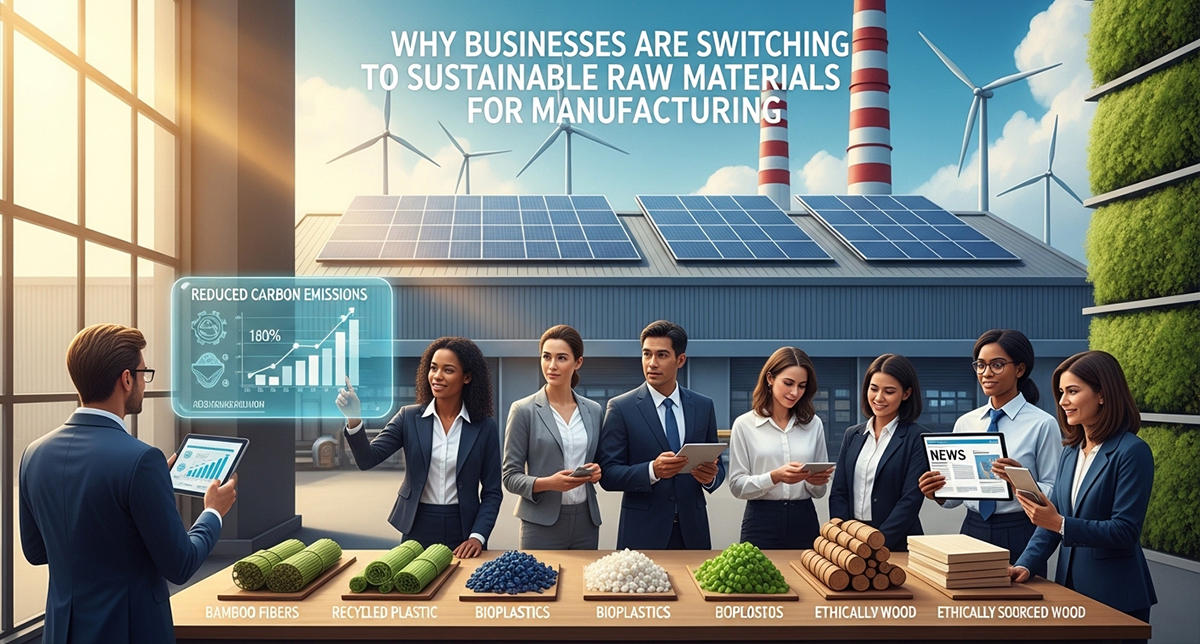
Why Businesses Are Switching to Sustainable Raw Materials for Manufacturing

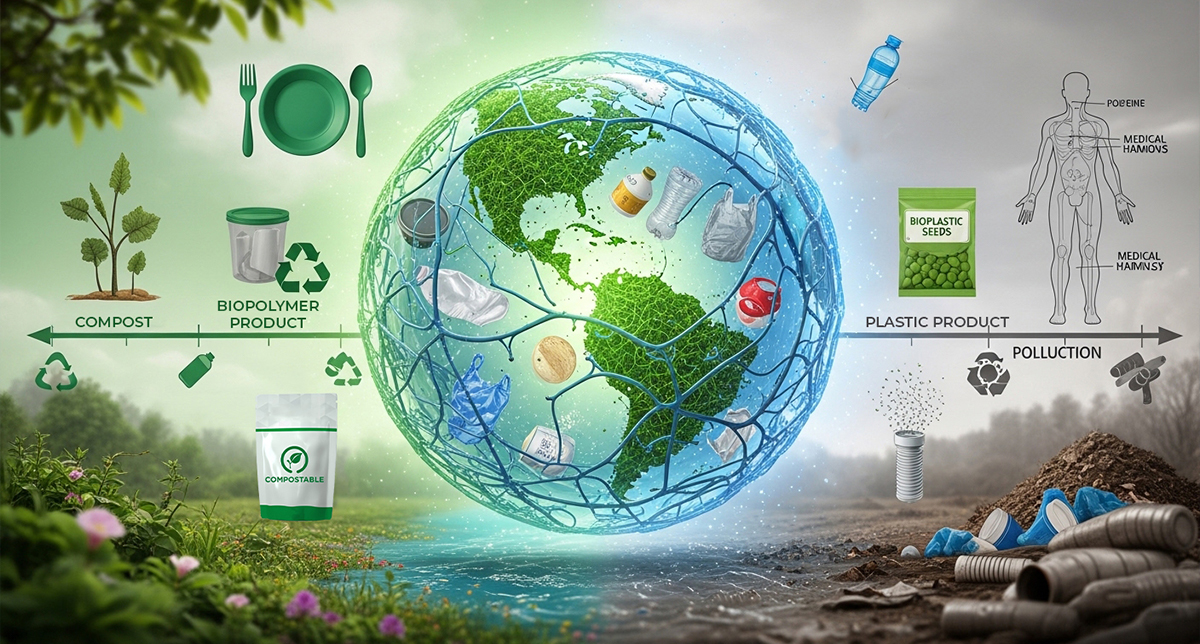
Plastic pollution has emerged as one of the most serious environmental threats facing the planet today. Every year, enormous quantities of plastic waste accumulate in landfills, rivers, oceans, and natural habitats, creating long-lasting damage to ecosystems and biodiversity. Conventional plastics, derived primarily from fossil fuels, are highly durable and resistant to natural decomposition, which means they can remain in the environment for centuries. This growing concern has encouraged industries and researchers to seek alternative materials that are both functional and environmentally responsible. Among the most promising solutions are biopolymers, which are rapidly gaining attention for their potential to reduce plastic pollution while supporting sustainable economic growth.

Biopolymers are produced from renewable biological resources such as corn starch, sugarcane, cellulose, and other plant-based materials. Unlike petroleum-based plastics, many biopolymers are designed to biodegrade or compost under appropriate environmental conditions. This characteristic allows them to break down into natural elements without leaving harmful residues behind. As a result, they offer a more sustainable lifecycle compared to traditional plastics, helping to minimize waste accumulation and environmental contamination. With growing awareness about sustainability, industries across the world are adopting biopolymers in applications ranging from packaging and agriculture to healthcare and consumer products.

The packaging sector represents one of the most important areas where biopolymers are making a meaningful difference. Single-use packaging materials contribute significantly to global plastic waste, especially in food delivery, retail, and e-commerce industries. By transitioning to biopolymer-based packaging solutions, companies can reduce their dependence on conventional plastics while meeting environmental regulations and consumer expectations. Compostable carry bags, biodegradable films, and plant-based containers are becoming increasingly popular as businesses aim to adopt greener practices. Organizations such as Deltora Biopolymers Private Limited are actively supporting this shift by developing advanced eco-friendly materials that serve as effective alternatives to traditional plastic products.

Biopolymers also contribute to the development of a circular economy, which focuses on reducing waste through reuse, recycling, and resource recovery. Instead of following the traditional linear model of production and disposal, biopolymer-based products can be integrated into composting systems, where they break down alongside organic waste. The resulting compost can then be used to enrich soil and support agricultural productivity, creating a sustainable loop of resource utilization. This approach not only reduces landfill pressure but also supports environmentally responsible waste management practices.

Another important benefit of biopolymers is their ability to lower greenhouse gas emissions. Since they are derived from renewable plant sources, the raw materials used in biopolymer production absorb carbon dioxide during growth. This natural carbon absorption partially offsets emissions generated during manufacturing, resulting in a lower overall carbon footprint compared to fossil-based plastics. By adopting biopolymers, industries can contribute to climate change mitigation efforts while addressing plastic pollution challenges simultaneously.

Agriculture is another sector where biopolymers are proving highly beneficial. Traditional plastic mulch films and agricultural coverings often remain in soil long after use, causing contamination and disposal difficulties. Biodegradable alternatives made from biopolymers eliminate these concerns because they naturally decompose over time. Farmers can improve crop productivity while reducing environmental impact, making sustainable agriculture more achievable. Companies like Deltora Biopolymers Private Limited are playing an important role in providing innovative solutions that support both agricultural efficiency and environmental conservation.

The healthcare sector is also exploring opportunities for biopolymer adoption. Hospitals and medical facilities generate significant plastic waste through disposable packaging, protective equipment, and single-use medical supplies. Biodegradable materials offer a practical way to reduce this environmental burden without compromising hygiene or safety standards. As research continues, more medical-grade biopolymer applications are expected to emerge, contributing to greener healthcare practices.

Despite their advantages, biopolymers still face certain challenges. Production costs can be higher than traditional plastics, and composting infrastructure is not yet widely available in all regions. Additionally, consumer awareness regarding proper disposal methods remains limited, which can reduce the effectiveness of biodegradable products. However, ongoing technological advancements, government policies supporting sustainability, and increased industry investment are gradually overcoming these barriers. As production volumes increase, costs are expected to decrease, making biopolymers more accessible for widespread use.

Innovation remains the driving force behind the growth of the biopolymer industry. Researchers are continuously developing materials with enhanced durability, flexibility, and performance characteristics to meet diverse industrial needs. These advancements are expanding the potential applications of biopolymers beyond packaging into sectors such as automotive, textiles, electronics, and construction. The future of sustainable materials is closely linked to continued research and collaboration between manufacturers, policymakers, and environmental organizations.

In conclusion, biopolymers are playing a transformative role in addressing the global plastic pollution crisis by offering renewable, biodegradable, and environmentally responsible alternatives to conventional plastics. Their ability to support circular economy practices, reduce carbon emissions, and minimize long-term waste makes them an essential component of sustainable development. As industries and consumers increasingly prioritize environmental responsibility, the adoption of biopolymers will continue to grow, paving the way for a cleaner and more sustainable future for generations to come.

The Role of Biopolymers in Reducing Global Plastic Pollution

Plastic pollution has become one of the most pressing environmental challenges worldwide. Millions of tons of plastic waste enter landfills, oceans, and natural ecosystems every year, causing long-term damage to wildlife, soil health, and human well-being. Traditional plastics, made from fossil fuels, take hundreds of years to decompose, leading to severe environmental consequences. In response to this growing crisis, biopolymers have emerged as a promising solution that can significantly reduce global plastic pollution while supporting sustainable development.

Biopolymers are materials derived from renewable biological sources such as plant starch, corn, sugarcane, cellulose, and other natural resources. Unlike conventional plastics, many biopolymers are biodegradable or compostable, meaning they can break down naturally under the right environmental conditions. This ability to decompose reduces long-term waste accumulation and helps minimize pollution in landfills and oceans. As industries seek environmentally responsible alternatives, biopolymers are gaining popularity across multiple sectors, including packaging, agriculture, healthcare, and consumer goods.

One of the most impactful applications of biopolymers is in the packaging industry. Packaging accounts for a large portion of global plastic consumption, particularly single-use items such as bags, wrappers, and containers. By replacing traditional plastics with biopolymer-based materials, companies can significantly reduce their environmental footprint. Compostable packaging made from biopolymers not only performs well but also aligns with sustainability goals and regulatory requirements. Manufacturers such as Deltora Biopolymers Private Limited are actively contributing to this transition by developing eco-friendly material solutions designed to replace conventional plastic products.

Biopolymers also play a crucial role in supporting the circular economy. Instead of following a linear model of production, use, and disposal, biopolymer-based products can be integrated into systems that promote recycling, composting, and resource recovery. For example, compostable biopolymer packaging can be processed along with organic waste, converting it into nutrient-rich compost that benefits agriculture. This approach reduces landfill waste and supports sustainable waste management practices, creating a positive environmental cycle.

Another significant advantage of biopolymers is their potential to reduce carbon emissions. Since many biopolymers are produced from renewable resources, their overall carbon footprint is often lower compared to petroleum-based plastics. Plants used to produce biopolymers absorb carbon dioxide during their growth, partially offsetting emissions generated during manufacturing. This characteristic makes biopolymers an important tool in combating climate change while addressing plastic pollution simultaneously.

Agriculture is another sector benefiting from biopolymer innovation. Biodegradable mulch films, plant protection materials, and controlled-release agricultural products are helping farmers improve productivity while reducing environmental impact. Traditional plastic-based agricultural materials often remain in soil for years, causing contamination and disposal challenges. Biopolymer alternatives break down naturally, eliminating the need for removal and reducing soil pollution. Companies like Deltora Biopolymers Private Limited are working toward sustainable agricultural solutions that balance productivity with environmental responsibility.

The healthcare and medical industries are also exploring biopolymer applications. Biodegradable medical packaging, disposable healthcare products, and specialized materials are being developed to reduce plastic waste generated by hospitals and medical facilities. Since hygiene and safety are critical in healthcare environments, biopolymers offer a valuable solution by providing functionality while maintaining environmental sustainability.

Despite the many benefits, challenges remain in the widespread adoption of biopolymers. Production costs are often higher compared to conventional plastics, and infrastructure for composting and recycling biopolymer products is still developing in many regions. Additionally, consumer awareness about proper disposal methods is limited, which can reduce the effectiveness of biodegradable materials. However, ongoing research, technological advancements, and government support are gradually addressing these barriers, making biopolymers more accessible and affordable.

Innovation continues to drive the growth of the biopolymer industry. Scientists and manufacturers are developing new materials with improved strength, flexibility, and durability to meet the demands of various applications. As technology advances and production scales increase, the cost gap between biopolymers and traditional plastics is expected to narrow, encouraging broader adoption across industries.

In conclusion, biopolymers are playing a transformative role in reducing global plastic pollution by offering sustainable alternatives to conventional plastics. Their ability to biodegrade, support circular economy practices, and reduce carbon emissions makes them a powerful solution for environmental challenges. As industries, governments, and consumers increasingly prioritize sustainability, biopolymers will become an essential part of the global effort to protect ecosystems and promote responsible resource use. With continued innovation and collaboration, the transition toward biopolymer-based materials has the potential to create a cleaner, healthier, and more sustainable future for generations to come.

How Sustainable Materials Are Transforming Modern Packaging Industries

The global packaging industry is undergoing a major transformation as sustainability becomes a central focus for businesses, governments, and consumers. Traditional packaging materials, especially single-use plastics, have contributed significantly to environmental pollution, leading to increased demand for eco-friendly alternatives. Sustainable materials are now reshaping how products are packaged, transported, and consumed, creating new opportunities for innovation while reducing environmental impact.

One of the key reasons behind this transformation is the growing awareness of environmental challenges such as plastic waste, carbon emissions, and resource depletion. Consumers are becoming more conscious of their environmental footprint and are actively choosing brands that demonstrate responsible practices. As a result, companies are rethinking their packaging strategies and investing in sustainable materials that align with environmental goals while maintaining product safety and quality.

Sustainable materials include biodegradable polymers, compostable films, recyclable paper-based solutions, plant-based plastics, and reusable packaging systems. These materials are designed to minimize environmental harm by reducing waste, lowering carbon emissions, and promoting circular economy principles. Unlike conventional plastics, many sustainable materials break down naturally or can be reused and recycled efficiently, making them more environmentally responsible choices for modern packaging needs.

The food and beverage industry is one of the largest adopters of sustainable packaging solutions. With increasing regulations on plastic usage and growing consumer demand for eco-friendly products, businesses are transitioning toward biodegradable containers, compostable wraps, and recyclable packaging formats. Sustainable materials help preserve food quality while reducing environmental impact, making them a practical and responsible choice for manufacturers and retailers alike.

E-commerce is another sector experiencing rapid growth in sustainable packaging adoption. The rise of online shopping has significantly increased packaging waste due to shipping materials, protective layers, and single-use plastics. Companies are now exploring alternatives such as recyclable mailers, compostable packaging films, and minimalistic packaging designs to reduce waste. Sustainable packaging not only supports environmental responsibility but also enhances brand image, as customers increasingly appreciate companies that prioritize sustainability.

Technological advancements are playing a crucial role in accelerating the adoption of sustainable materials. Innovations in material science have led to the development of high-performance biopolymers that match or even exceed the durability and functionality of traditional plastics. These advanced materials are suitable for a wide range of applications, including flexible packaging, rigid containers, and industrial packaging solutions. Manufacturers such as Deltora Biopolymers Private Limitedare contributing to this shift by developing innovative eco-friendly materials that meet both environmental and industry standards.

Another significant impact of sustainable materials is the move toward a circular economy. Instead of a linear model where products are used and discarded, sustainable packaging promotes reuse, recycling, and composting. This approach reduces resource consumption and waste generation while creating long-term environmental benefits. Companies that adopt circular packaging solutions often achieve cost savings over time through improved resource efficiency and reduced waste management expenses.

Sustainable packaging also offers strong branding advantages. Modern consumers are more likely to support brands that demonstrate environmental responsibility. Packaging made from eco-friendly materials communicates a company’s commitment to sustainability, helping build trust and loyalty among customers. Businesses that incorporate sustainable packaging into their strategies can differentiate themselves in competitive markets while meeting evolving consumer expectations.

The healthcare and pharmaceutical industries are also exploring sustainable packaging solutions. While safety and hygiene remain top priorities, advancements in sustainable materials are enabling manufacturers to reduce plastic usage without compromising product integrity. Compostable and recyclable packaging options are being tested and implemented to create environmentally responsible solutions in this highly regulated sector.

Despite the numerous benefits, challenges such as higher production costs, limited infrastructure for composting, and lack of awareness still exist. However, ongoing research, government support, and increasing demand are gradually addressing these issues. As production scales increase, costs are expected to decline, making sustainable packaging more accessible to businesses of all sizes. Companies like Deltora Biopolymers Private Limited are helping bridge this gap by providing innovative and cost-effective solutions for modern packaging requirements.

Looking ahead, the future of packaging will be driven by sustainability, innovation, and regulatory compliance. Businesses that adopt sustainable materials early will gain a competitive advantage while contributing to environmental protection. Governments worldwide are likely to introduce stricter regulations on plastic usage, further accelerating the shift toward eco-friendly packaging solutions.

In conclusion, sustainable materials are transforming modern packaging industries by reducing environmental impact, improving resource efficiency, and meeting evolving consumer expectations. As technology advances and awareness grows, sustainable packaging will become the new standard across industries. Companies that invest in eco-friendly innovation today will not only support environmental sustainability but also position themselves for long-term growth and success in the rapidly evolving global market.