For years, recycling has been one of the most widely discussed approaches to sustainability. Recycling remains important, but the future of environmental responsibility cannot depend on recycling alone. Many products are difficult to collect, separate or process after use, while others may lose quality through repeated recycling cycles. As industries face growing pressure to reduce waste and use resources more responsibly, attention is shifting towards a more fundamental question: can we make smarter material choices before a product is even manufactured?
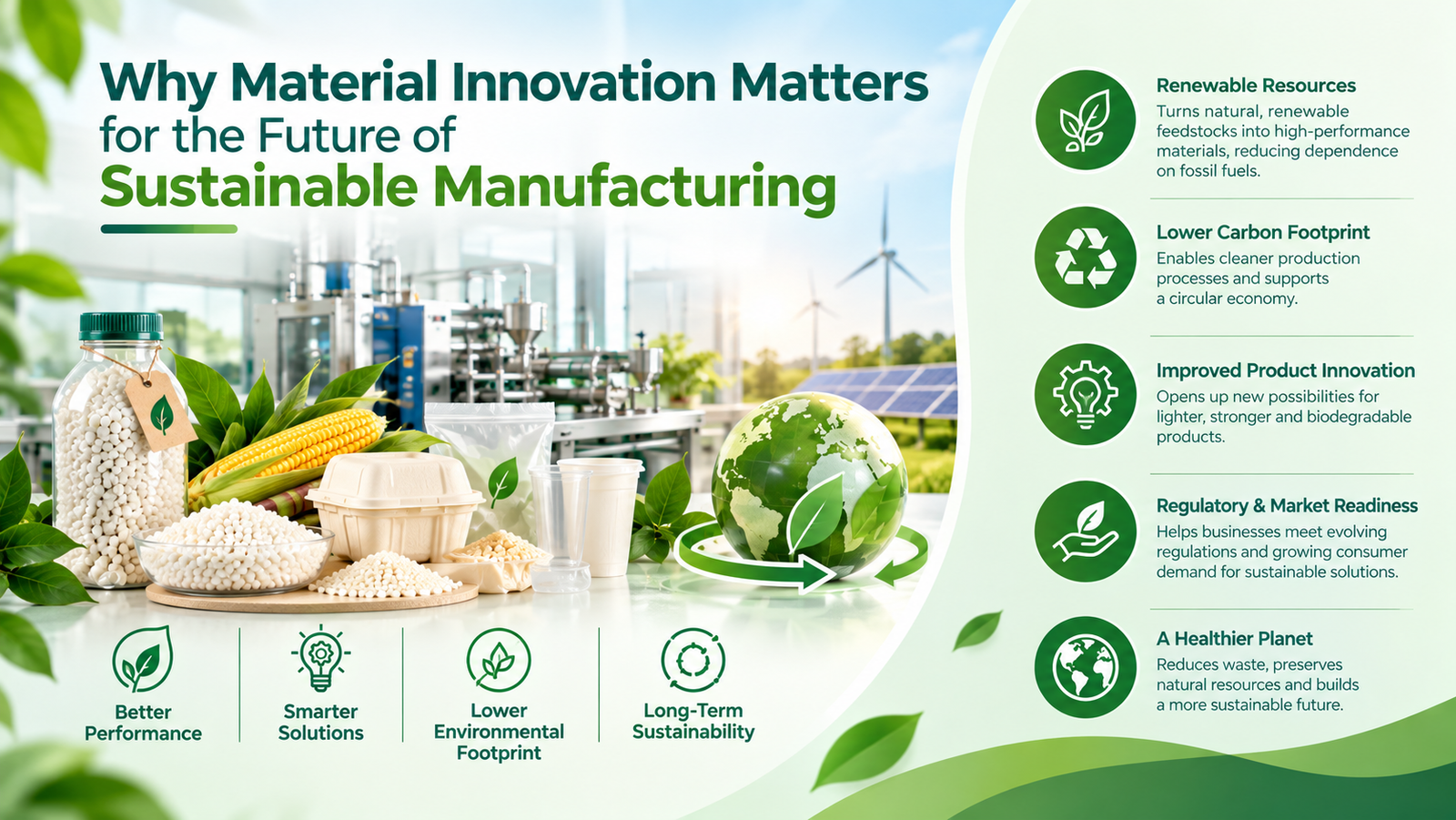
The answer is increasingly yes. Innovation in material science is helping businesses rethink how products are designed, produced, used and managed at the end of their lifecycle. Instead of focusing only on what happens after disposal, companies can consider renewable resources, compostable materials, efficient material formulations, reduced material consumption and application-specific solutions from the beginning.
Sustainability Begins at the Material Selection Stage
Every product starts with a material choice. That decision can influence manufacturing efficiency, product performance, resource consumption and potential environmental impact. Choosing a material simply because it is familiar or inexpensive may not always provide the best long-term solution.
Smarter material choices involve looking beyond the initial price and considering the complete purpose of the product. Does the material use resources efficiently? Is it suitable for the intended application? Can unnecessary material consumption be reduced? Are there more environmentally responsible alternatives that can still meet performance requirements?
This approach encourages industries to think about sustainability before waste is created. Better decisions at the design and development stage can potentially reduce problems later in the product lifecycle.
Moving Beyond the Traditional Take-Make-Dispose Model
For decades, many industries have followed a largely linear model: take resources, manufacture products, use them and dispose of them. Recycling helps recover some value from this system, but it does not completely solve the challenge of resource consumption and waste generation.
A more sustainable future requires businesses to explore ways of reducing waste at the source. This can include using renewable or alternative raw materials, improving product design, reducing unnecessary packaging and developing materials that are better aligned with responsible end-of-life management.
Deltora Biopolymers Private Limited supports this shift through its focus on innovative compostable compounds, composites and tailor-made material solutions. By encouraging material innovation at the development stage, the company represents the growing movement towards solutions designed with both practical requirements and environmental responsibility in mind.
Performance and Sustainability Must Work Together
One common misconception is that sustainable materials must compromise on performance. In reality, wider adoption depends on sustainable alternatives being practical for real applications. A material must still meet requirements related to strength, flexibility, processing, durability and usability.
This is why research and development are so important. Advanced material formulations can be designed for specific applications instead of relying on a one-size-fits-all approach. Packaging, agriculture, healthcare, retail and consumer products all have different requirements, and smarter material development allows manufacturers to consider these differences.
The future of sustainability is therefore not simply about replacing one material with another. It is about selecting or developing the right material for the right purpose while avoiding unnecessary environmental impact.
Renewable Resources Can Create New Opportunities
Another important direction in sustainable material innovation is the use of renewable resources and agricultural residues. Materials that were once viewed primarily as waste may offer opportunities for value creation through research, processing and advanced compounding.
This approach can support more efficient resource use while encouraging industries to think differently about available raw materials. Agricultural residues, for example, may potentially be incorporated into innovative composite solutions for suitable applications. Such developments can create additional value from existing resources and support efforts to reduce certain forms of waste.
The goal is not to assume that every alternative material is automatically sustainable. Instead, businesses need to evaluate sourcing, processing, performance, application and end-of-life considerations carefully. Smarter choices require a complete understanding of how a material fits into the broader product lifecycle.
Reducing Waste Before It Reaches the Recycling Stage
Recycling deals with materials after they have completed their primary use. Smarter material choices can help address waste earlier. Reducing excess packaging, improving material efficiency and selecting application-appropriate materials can potentially decrease the amount of waste generated in the first place.
Manufacturing innovation also plays a role. More precise formulations and better process control can help reduce material losses and production variations. When businesses use resources more efficiently, they can improve both environmental performance and operational efficiency.
This is an important reason why sustainability should not be treated as a separate department or final-stage activity. Material selection, product design, manufacturing and waste management should all be part of the same long-term strategy.
Customised Solutions Can Prevent Unnecessary Consumption
Different industries need different material properties. Using more material than necessary or selecting a solution that does not match the actual application can lead to inefficiency and waste.
Customised material development offers a smarter alternative. By focusing on the requirements of a specific product or manufacturing process, businesses can work towards materials with suitable properties rather than simply choosing a standard option.
Deltora Biopolymers Private Limited emphasises customer-specific and sustainable material development, reflecting the importance of matching innovation with real industrial needs. Tailor-made approaches can help manufacturers explore solutions that balance functionality, processing requirements, cost considerations and environmental goals.
The Future Will Be Built on Better Decisions
The next stage of sustainability will depend on more than recycling bins and waste collection systems. Recycling will continue to play a valuable role, but greater progress can come from making better decisions much earlier in the lifecycle of a product.
Industries will increasingly need to ask where materials come from, how efficiently they are used, whether alternatives can reduce unnecessary environmental impact and what happens after the product has served its purpose. Innovation in renewable resources, compostable materials, composites and efficient manufacturing can help businesses explore these questions in more practical ways.
Smarter material choices also create an opportunity to connect sustainability with business value. Reduced waste, improved resource efficiency and application-specific product development can support operational goals while helping companies respond to changing environmental expectations.
Conclusion
Beyond recycling, the future of sustainability starts with choosing materials more thoughtfully. The biggest opportunities may come from preventing unnecessary waste, improving resource efficiency and developing materials that are designed with their complete lifecycle in mind.
As research and technology continue to advance, industries have an opportunity to move towards a more intelligent approach to production. The focus should not simply be on dealing with waste after it is created. It should begin with asking whether better material choices can help reduce the problem from the start.
By combining innovation, responsible resource use and practical performance, businesses can create products that support both commercial needs and long-term environmental responsibility. That is why the future of sustainability starts not only with recycling, but with making smarter choices about the materials used every day.
Innovation Is Changing the Meaning of Performance
Performance remains essential for every industry. Materials and products must meet specific requirements related to strength, flexibility, durability, heat resistance, moisture resistance and usability. Sustainable alternatives can only achieve wider adoption when they are capable of performing effectively in real-world applications.
This is where material science and continuous research play an important role. Advanced formulations and specially developed material blends are helping manufacturers improve the functional properties of sustainable materials. Instead of simply replacing one material with another, innovators are designing solutions around the exact requirements of an application.
For example, packaging manufacturers may need materials with good strength and processing characteristics, while agricultural applications may require products designed for specific environmental conditions. Innovation allows manufacturers to develop more targeted solutions rather than relying on a single standard material for every purpose.
Deltora Biopolymers Private Limited is contributing to this approach by focusing on research, customer-specific development and sustainable material innovation. The company’s R&D efforts include developing compostable compounds and composites designed to help businesses move towards more environmentally responsible manufacturing while addressing practical performance requirements.
Smarter Production Can Help Control Costs
One of the biggest concerns surrounding sustainable innovation is cost. Businesses naturally need to consider raw material expenses, production efficiency, equipment requirements and long-term profitability before adopting a new solution.
Innovation can help address these concerns by improving the overall efficiency of the manufacturing process. Better material formulations may reduce unnecessary material consumption, while precise compounding and dosing can improve consistency and minimise production variations. Companies can also focus on developing materials that work effectively within existing manufacturing systems, reducing the need for major equipment investments.
Cost should also be viewed beyond the initial purchase price. A cheaper material that causes high wastage, inconsistent quality or operational difficulties may become more expensive over time. Similarly, a solution that improves process efficiency, reduces waste and supports changing environmental requirements can offer better long-term value.
The goal is not always to find the lowest-cost material. Instead, industries are increasingly looking for the best balance between product quality, operational efficiency and total lifecycle value.
Sustainable Materials Are Becoming More Practical
Environmental responsibility is no longer limited to a company’s public image. Customers, regulators and businesses are paying greater attention to how products are sourced, manufactured, used and managed after disposal.
Innovation in renewable and compostable materials is creating new opportunities for industries that want to reduce their dependence on conventional single-use plastics. Modern sustainable materials are being developed for a variety of applications, including packaging, agriculture, healthcare, retail, logistics and consumer products. Deltora’s stated focus on compostable materials, tailor-made solutions and nature-friendly alternatives reflects how material innovation is being used to support this transition.
However, environmental responsibility should involve more than simply changing the final material. Businesses can also improve sustainability by reducing production waste, using resources more efficiently, exploring agricultural residues and designing products with their complete lifecycle in mind.
This broader approach can create a stronger connection between environmental goals and business performance.
Turning Waste Into Valuable Resources
Another important area of innovation involves finding productive uses for materials that were previously considered waste. Agricultural residues, industrial by-products and renewable resources can potentially become part of new material solutions through advanced processing and research.
This approach can provide multiple benefits. It may reduce the environmental impact associated with waste disposal while creating additional value from available resources. At the same time, it encourages industries to think more carefully about resource efficiency and circular production.
Deltora Biopolymers Private Limited highlights the development of certain innovative composites using agricultural residues, with the aim of reducing density and cost while helping address pollution associated with agricultural waste burning. This demonstrates how research can potentially connect economic efficiency with environmental responsibility rather than treating them as competing priorities.
Customisation Helps Avoid Compromise
Every industry has different requirements. A food packaging application does not face the same challenges as an agricultural product or a logistics solution. As a result, innovation increasingly focuses on customisation.
Tailor-made material solutions can help businesses select properties based on their actual manufacturing and product needs. This may help avoid overengineering, unnecessary material usage and unsuitable product designs. By developing solutions around specific applications, manufacturers can focus resources where they create the greatest value.
Customer-driven innovation is particularly important because practical industry challenges often lead to new research and product development opportunities. Continuous feedback between material developers and manufacturers can support better-performing, more efficient and more sustainable solutions.
Technology Supports Better Decision-Making
Digital tools and modern manufacturing technologies are also helping industries manage resources more effectively. Data can help identify material waste, monitor production consistency, improve quality control and support more informed decisions.
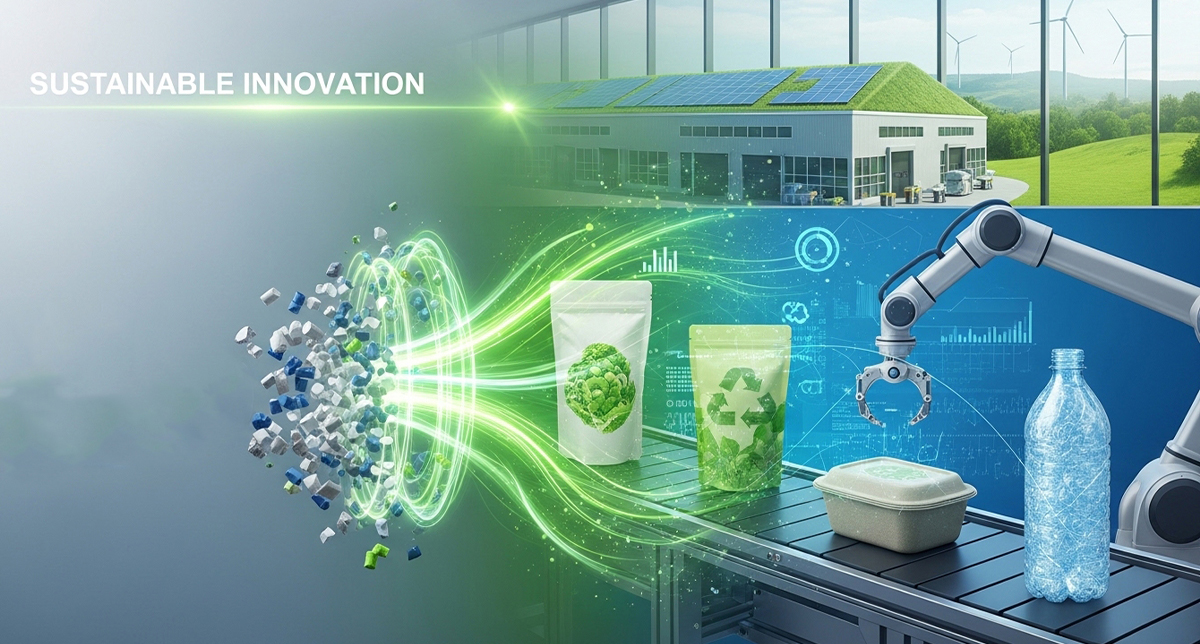
Automation and precision technologies can further reduce avoidable errors and improve efficiency. When combined with advanced materials, these improvements can help manufacturers achieve more consistent output while reducing unnecessary consumption.
Innovation, therefore, is not only about inventing a completely new product. It can also involve improving an existing process, refining a material formulation or finding a more efficient way to use available resources.
Building a More Responsible Industrial Future
The industries that succeed in the future will need to balance commercial goals with growing environmental expectations. Performance cannot be ignored, because products must remain reliable. Cost cannot be ignored, because businesses must remain competitive. Environmental responsibility cannot be ignored, because long-term industrial growth depends on better resource management and reduced environmental impact.
Innovation is helping bring these priorities together. Through advanced materials, efficient manufacturing, customised product development, waste reduction and continuous research, industries can move away from the idea that sustainability always requires sacrificing quality or profitability.
The path forward will require collaboration between researchers, manufacturers, businesses and consumers. As technology continues to evolve, industries will have more opportunities to create products that perform effectively, make economic sense and support a more responsible approach to production.
Ultimately, true innovation is about creating smarter solutions for real challenges. By balancing performance, cost and environmental responsibility, industries can build stronger businesses while contributing to a cleaner and more sustainable future.