
Sustainability is no longer just a corporate responsibility initiative—it has become a practical business strategy. Companies across industries are discovering that adopting environmentally responsible practices can reduce waste, improve operational efficiency, and strengthen their brand reputation. The good news is that improving sustainability does not always require significant investments. In many cases, businesses can implement simple and cost-effective changes that benefit both the environment and their bottom line.
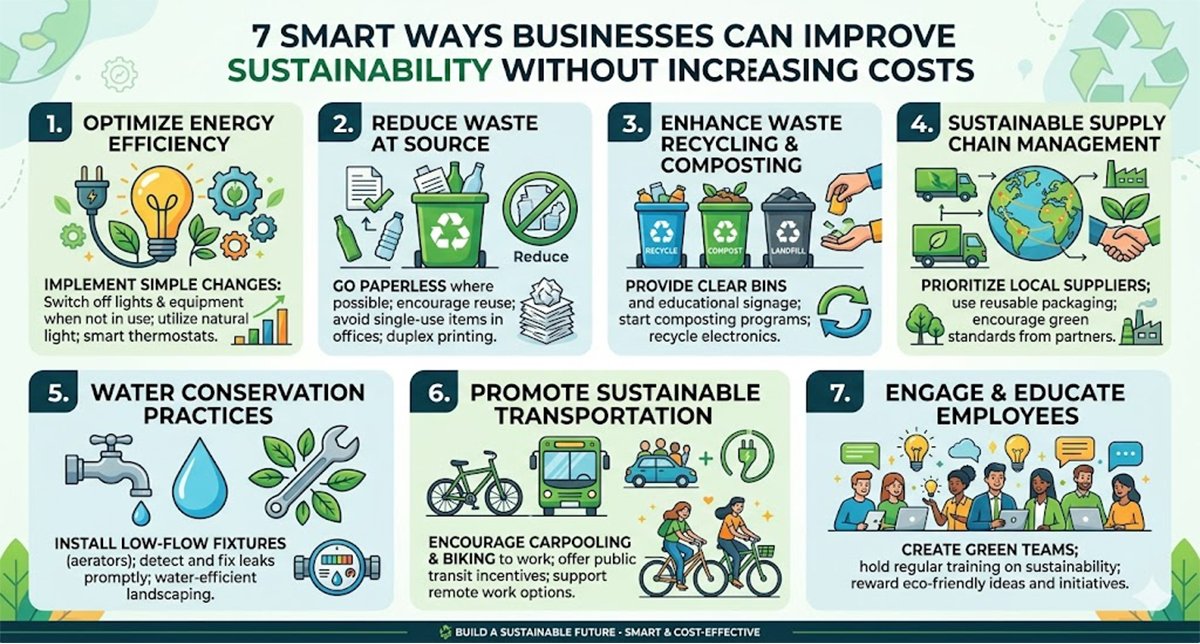
Here are seven smart ways businesses can improve sustainability without increasing costs.
1. Reduce Energy Consumption Through Better Practices
One of the easiest ways to improve sustainability is by reducing energy usage. Many businesses waste electricity through inefficient lighting, unnecessary equipment operation, and poor energy management habits.
Simple actions such as switching off unused devices, utilizing natural daylight, and scheduling equipment maintenance can significantly reduce energy consumption. Encouraging employees to adopt energy-saving habits can also make a noticeable difference over time.
Lower energy consumption not only reduces environmental impact but also decreases monthly utility expenses, making it a win-win strategy for businesses.
2. Minimize Waste Generation
Waste reduction is one of the most effective sustainability practices a company can adopt. Businesses should evaluate their operations to identify areas where materials are being unnecessarily wasted.
Examples include reducing excessive packaging, optimizing inventory management, and implementing digital documentation instead of paper-based processes. Conducting regular waste audits can help organizations understand where improvements can be made.
By minimizing waste, businesses can lower disposal costs while contributing to a cleaner environment.
3. Encourage Reuse and Recycling
Reusing and recycling materials can significantly reduce resource consumption without adding costs. Many office supplies, packaging materials, and production inputs can be reused before being discarded.
Setting up clear recycling systems within the workplace helps employees properly separate recyclable materials. Businesses can also collaborate with suppliers and customers to create circular practices that maximize material usage.
Organizations that embrace recycling often find opportunities to save money while reducing their environmental footprint.
4. Optimize Resource Management
Efficient use of resources such as water, raw materials, and office supplies can greatly enhance sustainability efforts. Businesses should regularly monitor resource consumption and identify opportunities for optimization.
For example, fixing water leaks promptly, purchasing supplies based on actual needs, and reducing unnecessary printing can help conserve valuable resources. Data-driven monitoring systems can also reveal areas where consumption can be reduced.
Resource optimization helps businesses operate more efficiently while supporting long-term environmental goals.
5. Adopt Sustainable Procurement Practices
Sustainability begins with the supply chain. Businesses can improve their environmental performance by choosing suppliers that prioritize responsible sourcing and environmentally friendly practices.
This does not necessarily mean paying higher prices. Many suppliers now offer sustainable alternatives that are competitively priced and provide similar performance to traditional products. Evaluating suppliers based on quality, sustainability, and efficiency can create long-term value.
Companies like Deltora Biopolymers Private Limited are contributing to a more sustainable future by promoting innovative solutions that support environmentally responsible business practices. By partnering with sustainability-focused organizations, businesses can strengthen their commitment to reducing environmental impact.
6. Promote a Sustainability Culture Among Employees
Employee involvement is essential for successful sustainability initiatives. Organizations can achieve significant results by encouraging team members to participate in eco-friendly practices.
Simple measures such as reducing paper usage, conserving energy, minimizing waste, and supporting recycling programs can become part of everyday workplace habits. Providing regular awareness sessions and recognizing employee contributions can further strengthen engagement.
When sustainability becomes part of the company culture, businesses often achieve meaningful improvements without requiring major financial investments.
7. Transition Toward Eco-Friendly Packaging Solutions
Packaging plays a significant role in environmental sustainability. Businesses that rely on packaging can reduce their environmental impact by choosing materials that are recyclable, reusable, or environmentally responsible.
Rather than focusing solely on reducing packaging costs, companies should consider optimizing packaging design to use fewer materials while maintaining product protection. Lightweight and efficient packaging solutions can lower transportation costs and reduce resource consumption.
As industries continue to seek environmentally responsible alternatives, organizations such as Deltora Biopolymers Private Limited are helping businesses explore innovative packaging solutions that align with modern sustainability goals while maintaining operational efficiency.
Benefits of Sustainable Business Practices
Implementing sustainability initiatives provides several long-term advantages:
- Reduced operational expenses through efficient resource usage.
- Improved brand reputation among environmentally conscious customers.
- Enhanced employee engagement and workplace satisfaction.
- Better compliance with environmental regulations and industry standards.
- Increased competitiveness in markets that value responsible business practices.
- Greater resilience against future resource and environmental challenges.
Most importantly, sustainability initiatives often create efficiencies that lead to cost savings rather than additional expenses.
Conclusion
Businesses do not need large budgets to become more sustainable. Small, strategic improvements can generate meaningful environmental and financial benefits. By reducing energy consumption, minimizing waste, encouraging recycling, optimizing resource management, adopting sustainable procurement practices, engaging employees, and improving packaging strategies, organizations can build a more sustainable future without increasing operating costs.
As sustainability continues to shape consumer expectations and industry standards, businesses that proactively embrace responsible practices will be better positioned for long-term success. The key is to focus on practical changes that improve efficiency while reducing environmental impact, proving that sustainability and cost-effectiveness can go hand in hand.