
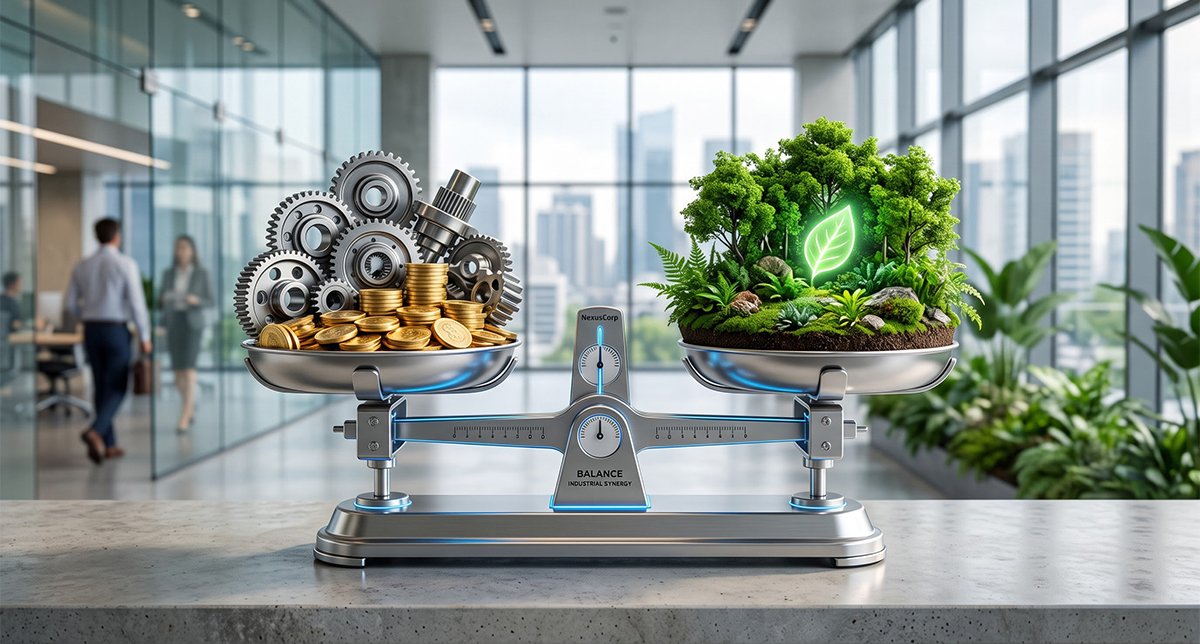
Industries across the world are facing a major challenge: how to deliver high-quality products, control manufacturing costs and reduce environmental impact at the same time. For many years, businesses often treated performance, affordability and sustainability as separate priorities. A product could be highly durable but expensive, cost-effective but environmentally harmful, or sustainable but unable to meet demanding industrial requirements. Today, innovation is changing this equation.
New materials, smarter manufacturing processes, automation and research-driven product development are helping industries find better ways to balance these three important goals. From packaging and agriculture to healthcare, consumer goods, logistics and manufacturing, businesses are increasingly looking for solutions that provide reliable performance without creating unnecessary costs or long-term environmental damage.
Innovation Is Changing the Meaning of Performance
Performance remains essential for every industry. Materials and products must meet specific requirements related to strength, flexibility, durability, heat resistance, moisture resistance and usability. Sustainable alternatives can only achieve wider adoption when they are capable of performing effectively in real-world applications.
This is where material science and continuous research play an important role. Advanced formulations and specially developed material blends are helping manufacturers improve the functional properties of sustainable materials. Instead of simply replacing one material with another, innovators are designing solutions around the exact requirements of an application.
For example, packaging manufacturers may need materials with good strength and processing characteristics, while agricultural applications may require products designed for specific environmental conditions. Innovation allows manufacturers to develop more targeted solutions rather than relying on a single standard material for every purpose.
Deltora Biopolymers Private Limited is contributing to this approach by focusing on research, customer-specific development and sustainable material innovation. The company’s R&D efforts include developing compostable compounds and composites designed to help businesses move towards more environmentally responsible manufacturing while addressing practical performance requirements.
Smarter Production Can Help Control Costs
One of the biggest concerns surrounding sustainable innovation is cost. Businesses naturally need to consider raw material expenses, production efficiency, equipment requirements and long-term profitability before adopting a new solution.
Innovation can help address these concerns by improving the overall efficiency of the manufacturing process. Better material formulations may reduce unnecessary material consumption, while precise compounding and dosing can improve consistency and minimise production variations. Companies can also focus on developing materials that work effectively within existing manufacturing systems, reducing the need for major equipment investments.
Cost should also be viewed beyond the initial purchase price. A cheaper material that causes high wastage, inconsistent quality or operational difficulties may become more expensive over time. Similarly, a solution that improves process efficiency, reduces waste and supports changing environmental requirements can offer better long-term value.
The goal is not always to find the lowest-cost material. Instead, industries are increasingly looking for the best balance between product quality, operational efficiency and total lifecycle value.
Sustainable Materials Are Becoming More Practical
Environmental responsibility is no longer limited to a company’s public image. Customers, regulators and businesses are paying greater attention to how products are sourced, manufactured, used and managed after disposal.
Innovation in renewable and compostable materials is creating new opportunities for industries that want to reduce their dependence on conventional single-use plastics. Modern sustainable materials are being developed for a variety of applications, including packaging, agriculture, healthcare, retail, logistics and consumer products. Deltora’s stated focus on compostable materials, tailor-made solutions and nature-friendly alternatives reflects how material innovation is being used to support this transition.
However, environmental responsibility should involve more than simply changing the final material. Businesses can also improve sustainability by reducing production waste, using resources more efficiently, exploring agricultural residues and designing products with their complete lifecycle in mind.
This broader approach can create a stronger connection between environmental goals and business performance.
Turning Waste Into Valuable Resources
Another important area of innovation involves finding productive uses for materials that were previously considered waste. Agricultural residues, industrial by-products and renewable resources can potentially become part of new material solutions through advanced processing and research.
This approach can provide multiple benefits. It may reduce the environmental impact associated with waste disposal while creating additional value from available resources. At the same time, it encourages industries to think more carefully about resource efficiency and circular production.
Deltora Biopolymers Private Limited highlights the development of certain innovative composites using agricultural residues, with the aim of reducing density and cost while helping address pollution associated with agricultural waste burning. This demonstrates how research can potentially connect economic efficiency with environmental responsibility rather than treating them as competing priorities.
Customisation Helps Avoid Compromise
Every industry has different requirements. A food packaging application does not face the same challenges as an agricultural product or a logistics solution. As a result, innovation increasingly focuses on customisation.
Tailor-made material solutions can help businesses select properties based on their actual manufacturing and product needs. This may help avoid overengineering, unnecessary material usage and unsuitable product designs. By developing solutions around specific applications, manufacturers can focus resources where they create the greatest value.
Customer-driven innovation is particularly important because practical industry challenges often lead to new research and product development opportunities. Continuous feedback between material developers and manufacturers can support better-performing, more efficient and more sustainable solutions.
Technology Supports Better Decision-Making
Digital tools and modern manufacturing technologies are also helping industries manage resources more effectively. Data can help identify material waste, monitor production consistency, improve quality control and support more informed decisions.
Automation and precision technologies can further reduce avoidable errors and improve efficiency. When combined with advanced materials, these improvements can help manufacturers achieve more consistent output while reducing unnecessary consumption.
Innovation, therefore, is not only about inventing a completely new product. It can also involve improving an existing process, refining a material formulation or finding a more efficient way to use available resources.
Building a More Responsible Industrial Future
The industries that succeed in the future will need to balance commercial goals with growing environmental expectations. Performance cannot be ignored, because products must remain reliable. Cost cannot be ignored, because businesses must remain competitive. Environmental responsibility cannot be ignored, because long-term industrial growth depends on better resource management and reduced environmental impact.
Innovation is helping bring these priorities together. Through advanced materials, efficient manufacturing, customised product development, waste reduction and continuous research, industries can move away from the idea that sustainability always requires sacrificing quality or profitability.
The path forward will require collaboration between researchers, manufacturers, businesses and consumers. As technology continues to evolve, industries will have more opportunities to create products that perform effectively, make economic sense and support a more responsible approach to production.
Ultimately, true innovation is about creating smarter solutions for real challenges. By balancing performance, cost and environmental responsibility, industries can build stronger businesses while contributing to a cleaner and more sustainable future.