
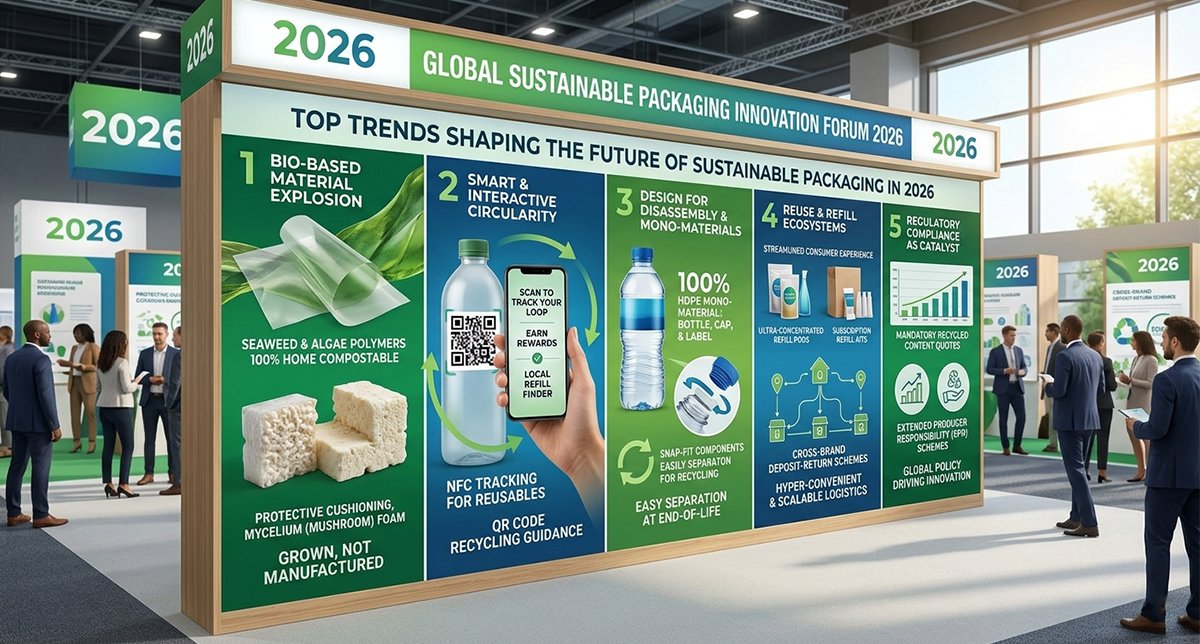
Sustainable packaging has become a major focus for businesses across the globe as environmental concerns, consumer expectations, and regulatory requirements continue to evolve. In 2026, sustainability is no longer just a trend—it is a critical business strategy that influences product development, supply chain management, and brand positioning. Companies across industries are actively seeking packaging solutions that reduce environmental impact while maintaining product protection, efficiency, and customer satisfaction.
The future of sustainable packaging is being shaped by innovation, changing consumer behavior, technological advancements, and a growing commitment to environmental responsibility. Businesses that stay ahead of these developments will be better positioned to meet market demands and achieve long-term success.
Here are the top trends shaping the future of sustainable packaging in 2026.
1. Increased Demand for Environmentally Responsible Packaging
Consumers are becoming more environmentally conscious and are actively supporting brands that prioritize sustainability. Purchasing decisions are increasingly influenced by a company’s environmental practices, including its packaging choices.
As a result, businesses are investing in packaging solutions that align with consumer expectations and demonstrate a commitment to reducing environmental impact. Sustainable packaging is now viewed as an important factor in building customer trust and strengthening brand loyalty.
Companies that adopt environmentally responsible packaging strategies can gain a competitive advantage in a marketplace where sustainability matters more than ever.
2. Packaging Reduction and Material Optimization
One of the most significant trends in 2026 is the focus on using fewer materials without compromising product protection. Businesses are redesigning packaging structures to eliminate unnecessary components and reduce overall material consumption.
Material optimization helps companies decrease waste generation, improve transportation efficiency, and reduce resource usage throughout the supply chain. Lightweight packaging designs also contribute to lower shipping costs and improved operational performance.
The emphasis on simplicity and efficiency is helping businesses achieve sustainability goals while maintaining product quality.
3. Growth of Circular Economy Packaging Models
The concept of a circular economy continues to influence packaging strategies worldwide. Instead of following a traditional “use and dispose” model, businesses are exploring ways to keep packaging materials in circulation for as long as possible.
This includes designing packaging that can be reused, recovered, recycled, or repurposed. Circular packaging systems help reduce waste while supporting more efficient use of resources.
As industries work toward long-term sustainability goals, circular economy principles are becoming a central component of modern packaging strategies.
4. Smart Packaging Technologies
Technology is playing an increasingly important role in sustainable packaging. Smart packaging solutions are helping businesses improve supply chain visibility, product tracking, and resource management.
Advanced technologies such as QR codes, digital labeling, and connected packaging systems allow consumers to access product information while reducing the need for excessive printed materials. Smart packaging can also improve inventory management and reduce product waste.
As technology continues to evolve, businesses will have greater opportunities to combine sustainability with innovation.
5. Stronger Regulatory Compliance Requirements
Governments and regulatory agencies are introducing stricter environmental regulations aimed at reducing packaging waste and promoting sustainability. Businesses are responding by adopting packaging solutions that align with evolving compliance standards.
Organizations that proactively invest in sustainable packaging are often better prepared to meet future regulatory requirements and avoid operational disruptions. Compliance-focused packaging strategies can also strengthen relationships with customers, investors, and stakeholders.
The increasing emphasis on environmental accountability will continue to drive packaging innovation throughout 2026 and beyond.
6. Greater Focus on Supply Chain Sustainability
Sustainability efforts are extending beyond packaging materials themselves to include the entire supply chain. Businesses are evaluating sourcing practices, transportation methods, manufacturing processes, and distribution networks to identify opportunities for environmental improvement.
Sustainable packaging is becoming part of broader supply chain strategies designed to reduce emissions, conserve resources, and improve efficiency. Organizations are increasingly seeking partners and suppliers that share similar sustainability objectives.
Companies such as Deltora Biopolymers Private Limited are supporting this shift by contributing to sustainable solutions that help businesses strengthen their environmental commitments throughout the supply chain.
7. Increased Corporate Sustainability Commitments
Businesses across industries are setting ambitious sustainability targets and incorporating environmental responsibility into their long-term strategies. Packaging often serves as one of the most visible areas where organizations can demonstrate progress toward these goals.
Investors, customers, and stakeholders increasingly expect companies to provide evidence of their sustainability efforts. As a result, organizations are investing in packaging initiatives that support waste reduction, resource efficiency, and environmental stewardship.
Sustainable packaging is becoming a key component of corporate social responsibility and environmental governance programs.
8. Data-Driven Sustainability Decisions
Businesses are increasingly using data analytics to measure and improve the environmental performance of packaging systems. Tracking resource consumption, waste generation, transportation efficiency, and packaging effectiveness enables organizations to make informed sustainability decisions.
Data-driven insights help companies identify opportunities for continuous improvement and optimize packaging strategies for maximum environmental and operational benefits.
As digital transformation accelerates, analytics will play an even greater role in shaping sustainable packaging initiatives.
9. Collaboration Across Industries
Sustainability challenges often require collective action. Businesses, manufacturers, suppliers, logistics providers, and industry organizations are collaborating more closely to develop effective packaging solutions.
Cross-industry partnerships encourage innovation, knowledge sharing, and the adoption of best practices. These collaborative efforts are helping businesses overcome sustainability challenges while accelerating progress toward environmental goals.
The future of sustainable packaging will increasingly depend on cooperation throughout the value chain.
10. Innovation Driving Sustainable Packaging Solutions
Innovation remains one of the strongest forces shaping the future of packaging. Research and development efforts continue to generate new approaches that improve packaging performance while reducing environmental impact.
Businesses are investing in advanced manufacturing processes, efficient packaging designs, and sustainable materials that support long-term environmental objectives. Continuous innovation enables companies to meet changing market demands while maintaining competitiveness.
Organizations like Deltora Biopolymers Private Limited recognize that innovation is essential for creating packaging solutions that balance sustainability, functionality, and business performance in an evolving marketplace.
The Future of Sustainable Packaging
The sustainable packaging industry is expected to continue experiencing significant growth as environmental awareness, technological advancement, and regulatory requirements drive change. Businesses that embrace sustainability today will be better prepared for future challenges and opportunities.
Companies that prioritize sustainable packaging can benefit from:
- Improved brand reputation.
- Stronger customer loyalty.
- Better operational efficiency.
- Reduced environmental impact.
- Greater regulatory preparedness.
- Enhanced long-term business resilience.
These benefits make sustainable packaging an important investment for organizations seeking future growth and market leadership.
Conclusion
The future of sustainable packaging in 2026 is being shaped by innovation, consumer expectations, regulatory developments, and corporate sustainability commitments. Trends such as packaging reduction, circular economy models, smart technologies, supply chain sustainability, and data-driven decision-making are transforming the way businesses approach packaging.
As industries continue to prioritize environmental responsibility, sustainable packaging will become an even more important component of business success. Organizations that adapt to these trends and invest in sustainable solutions will be well-positioned to meet evolving market demands while contributing to a cleaner and more sustainable future. By embracing innovation and responsible practices, businesses can create lasting value for customers, stakeholders, and the environment.