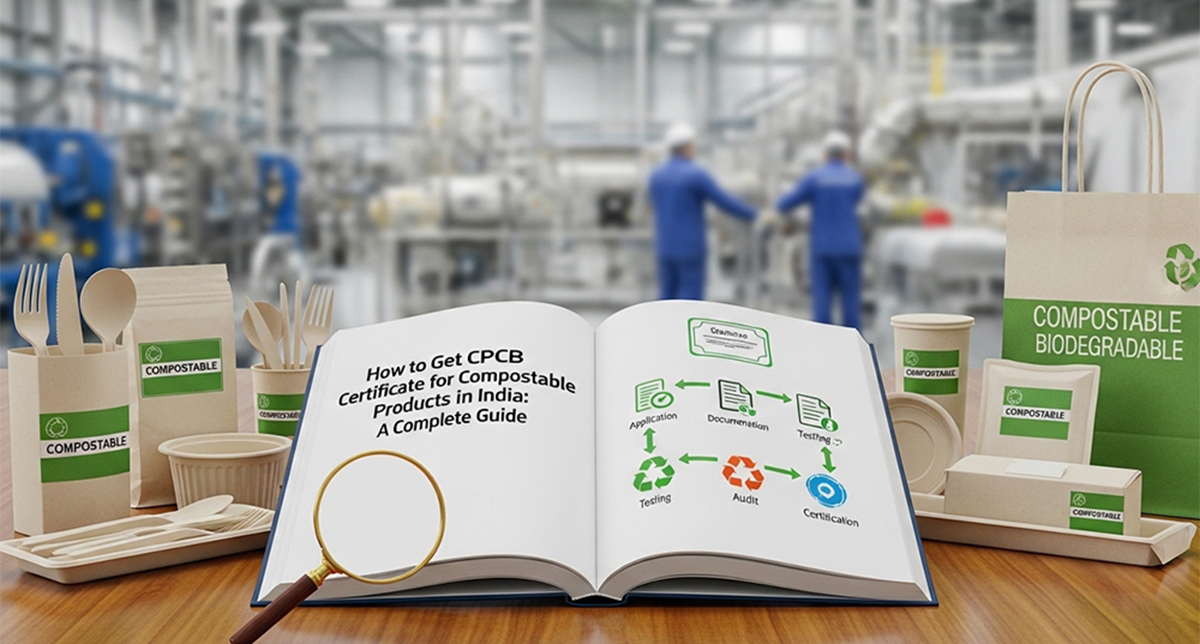
With the growing demand for sustainable packaging and eco-friendly alternatives, obtaining a CPCB Certificate for Compostable Products has become essential for manufacturers and sellers in India. As per the Plastic Waste Management Rules, compostable plastic products must be approved by the Central Pollution Control Board before they can be legally manufactured, marketed, or sold.
For businesses entering the biodegradable and compostable products sector, the CPCB Certificate for Compostable items not only ensures legal compliance but also builds trust among buyers, distributors, and regulatory authorities.
Table of Contents
- 1. What is CPCB Certification?
- 2. Why CPCB Certificate is Mandatory
- 3. Step-by-Step Process to Get Certification
- 4. Documents Required
- 5. Important Compliance Guidelines
- 6. Common Mistakes to Avoid
- 7. Conclusion
- 8. FAQs
1. What is CPCB Certification?
The Central Pollution Control Board (CPCB) is India’s apex authority for environmental regulation. The CPCB Certificate for Compostable Products confirms that a material meets compostability standards such as IS/ISO 17088 and can decompose without leaving harmful residues.
- Compostable carry bags
- Packaging films
- Disposable cutlery
- Compostable pouches
- Food packaging items
- Agricultural mulch films
2. Why CPCB Certificate is Mandatory
- Legal Compliance: Required under Plastic Waste Management Rules
- Prevention of False Claims: Avoid misleading sustainability claims
- Quality Validation: Ensures compostability standards
- Market Trust: Improves customer confidence
- Sales Approval: Required for manufacturing and selling
3. Step-by-Step Process to Get Certification
Step 1: Product Testing
- Biodegradability
- Compostability
- Heavy metal limits
- Disintegration time
- Toxic residue check
Step 2: Obtain SPCB / PCC Consent
- Consent to Establish (CTE)
- Consent to Operate (CTO)
Step 3: Prepare Documentation
Compile all business and technical documents.
Step 4: Apply on CPCB Portal
Submit application online with all required documents and reports.
Step 5: Certificate Approval
After approval, CPCB issues a certificate number which must be printed on packaging along with QR code and “COMPOSTABLE” label.
4. Documents Required
- Company registration certificate
- GST certificate
- PAN card
- Factory license
- SPCB consent certificates
- Product test report
- Manufacturing flow chart
- Raw material details
- Plant photographs
- Packaging label design
- Authorization letter
5. Important Compliance Guidelines
- Print certificate number on products
- Add QR code for traceability
- Use “COMPOSTABLE” label
- Submit six-monthly reports
- Maintain production records
6. Common Mistakes to Avoid
- Incomplete test reports
- Missing SPCB approvals
- Incorrect labeling
- False compostable claims
- Delayed compliance reporting
7. Conclusion
Obtaining a CPCB Certificate for Compostable Products is essential for businesses producing sustainable plastic alternatives in India. It ensures compliance, enhances brand credibility, and opens new market opportunities.
8. FAQs
- Is CPCB certification mandatory?
Yes, it is required before selling compostable products. - Which standard is used?
IS/ISO 17088 is commonly used. - How long does approval take?
Usually a few weeks to months. - Do sellers need certification?
Yes, depending on their role. - What if products are sold without certification?
Legal action and penalties may apply.